First Fish Chronicles: Swimming Upstream: How One School District is Changing Direction on EdTech
It takes one fish to shift the direction of a school. This school district can be a model.

Note from Emily:
This Substack is called First Fish Chronicles because being a “first fish” means, quite literally, swimming away from the school (a school of fish!) first to test the waters, encourage other fish down a better path (stream?), and help shift direction. It’s can be lonely sometimes, but once other fish see movement, change begins.
I’m frequently asked, “So who is getting EdTech right? What school districts have this figured out?”
Until recently, the answer was— none that I knew of.1
So it is my great honor to share with you the words of two courageous First Fish leaders who are showing school districts how to change direction on EdTech.
I first connected with Greg Taranto a few months ago when I saw a post about how he was rolling back EdTech in his district in the Canon-McMillan School District in Pennsylvania. Immediately, I emailed him and arranged a time to meet. Greg has been generous with his time, sharing his insights, describing his experiences, and modeling the courageous humility required of a good leader— to take new information and make changes because it is the right thing to do, even if it is the hard thing to do.
With his colleague, Mark Abbondanza, Assistant to the Superintendent for Grades K-6 in the same district, Greg has written an essay about how their district is stepping up and doing the right thing for children, educators, families, and education, by putting the needs of children— not tech companies— back into the heart of the classroom experience.
Thank you, Greg and Mark, for sharing these words and for your courageous leadership. May other fish soon follow!
Swimming Upstream
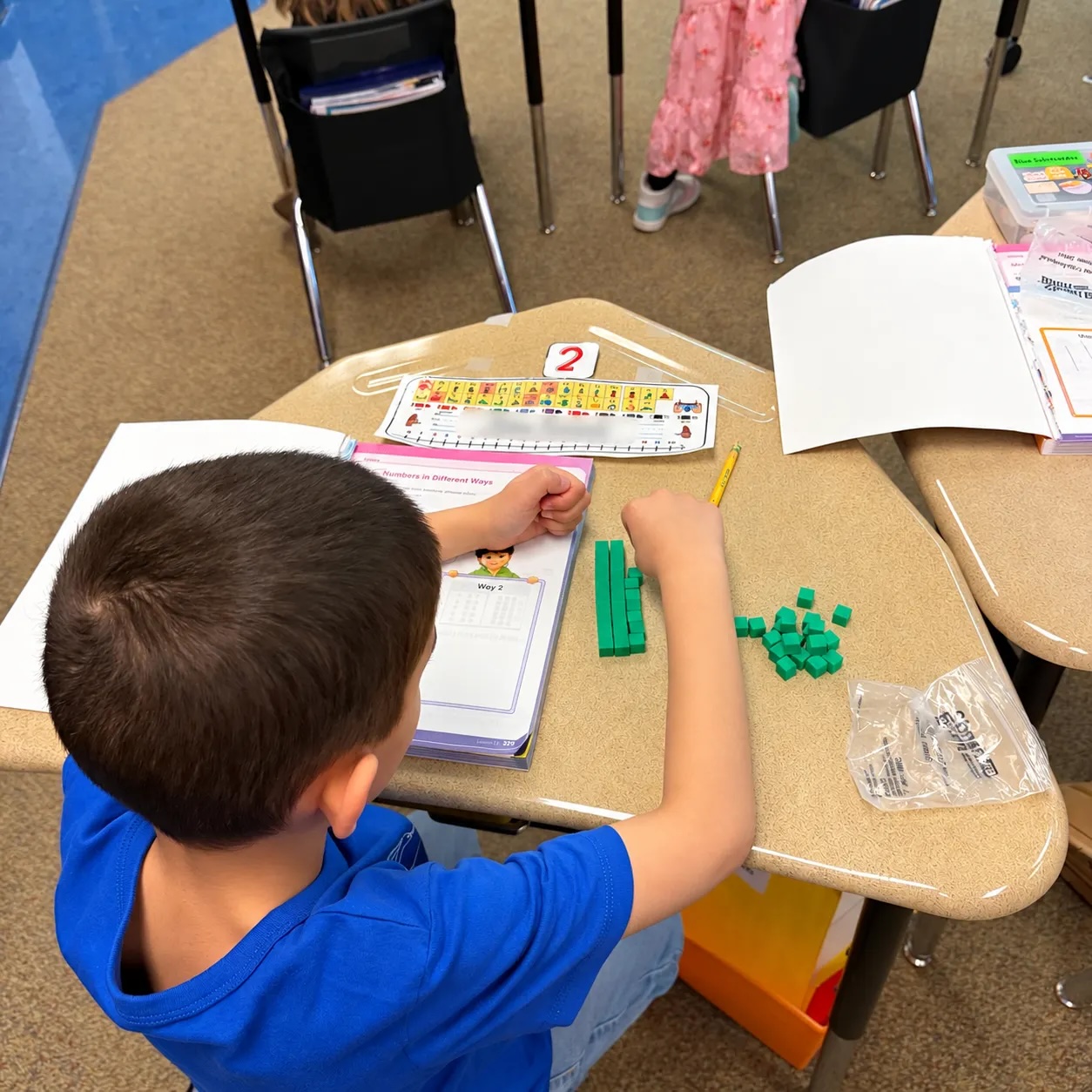
On May 1st, we announced that our school district was officially eliminating Chromebooks in grades K–2. We had been moving in this direction over the past four years, maintaining minimal usage in K–1 and limited use in 2nd grade. The announcement was a definitive stamp on what we already knew was in the best interest of our students’ developing brains. Alongside that decision, we emphasized our commitment to reducing screen time in grades 3–12 and eliminating standalone learning platforms (e.g., IXL, Reflex Math). As a district that previously had not relied too heavily on Chromebooks for instructional delivery, this shift has felt like a natural progression. Consequently, the announcement was fully embraced by our school community.
Our district has made a commitment to investing in high-quality print-materials and helping teachers understand the benefits of cognitive science principles. We are putting the teacher at the forefront to model examples and guide students through meaningful discussions and problem-solving experiences. Focusing on human-to-human interactions in the classroom rather than placing students in front of a screen results in better attention. Learning happens through sustained attention, yet big tech companies continue to develop learning platforms that rely on constant switching between tasks to keep students engaged. Instead, by blending high-quality instructional materials with high-quality teaching, we are protecting students’ attention, which Dr. Jared Cooney Horvath (2026) argues is the key to learning.
We still pride ourselves on maintaining a robust technology education program from 5th grade through high school. Our students engage with robotics, coding, CAD, engineering and design, cybersecurity, and digital safety. However, our stance is that technology belongs primarily in dedicated technology education courses. All students take these courses from 5th through 8th grade, providing them with the foundational experience to explore and expand their interests in high school and beyond.
“Our stance is that technology belongs primarily in dedicated technology education courses.”
-Dr. Greg Taranto and Dr. Mark Abbondanza,
Canon-McMillan School District
Teaching students how technology works is quite different from students sitting in front of a screen. Too often, school leaders talk about equipping students with 21st century learning skills. This doesn’t mean students need to be in front of a screen to acquire these skills, rather they need quality human-centered instruction in core subject areas like reading, writing, math, science, and social studies to develop critical thinking skills and foundational knowledge.
While we have shifted our approach, many school districts continue heading in the opposite direction, following the false narrative that more devices equate to better preparation for a tech-driven future. Now, many have doubled down with AI—the same underlying story, just with different tools. But there is a crucial difference: while traditional educational technology platforms have consistently underperformed compared to teacher-led instruction, AI has the potential to actively harm student learning.
The human brain requires productive struggle to build deep understanding. AI is designed to eliminate that struggle by doing the thinking for the user. If AI handles the thinking, the student does not—and if the student does not think, learning does not occur. Schema cannot be automatically implanted into a student’s brain; individuals must build it themselves. This requires active effort, and attempting to fast-track the process will only result in learning deficits.
“There is a crucial difference [between traditional EdTech and AI platforms]: While traditional educational technology platforms have consistently underperformed compared to teacher-led instruction, AI has the potential to actively harm student learning.”
-Dr. Greg Taranto and Dr. Mark Abbondanza,
Canon-McMillan School District
Because learning requires effort from students, it’s not always easy, nor should it be. Learning happens when students process new information, connect it to existing knowledge, and retrieve it from their memory. Unlike when they are using AI, when students are engaged in the cycle of learning, they are challenged to do the work to embed new information into their long-term memory. Focusing on cognitive science principles, our teachers are providing explicit instruction, guided practice, and opportunities for productive struggle through independent practice.
Recent PISA results clearly illustrate this ongoing trend: student over-reliance on technology correlates with lower academic achievement. The more students depend on technology, the lower their performance (Horvath, 2026).
On the heels of the PISA findings, a comprehensive 2026 JAMA study revealed that excessive screen time can have as detrimental an impact on learning as growing up in poverty. That insight alone should prompt school leaders to re-examine the level of device dependency in their classrooms.
Now more than ever, children need human-centered education, particularly when so much of their time outside school is spent in front of screens. Students deserve instructional practices grounded in cognitive science—many of which require low or no extra cost. Because large ed-tech vendors cannot easily monetize these low-cost, research-backed practices, they receive far less visibility in the broader educational market.
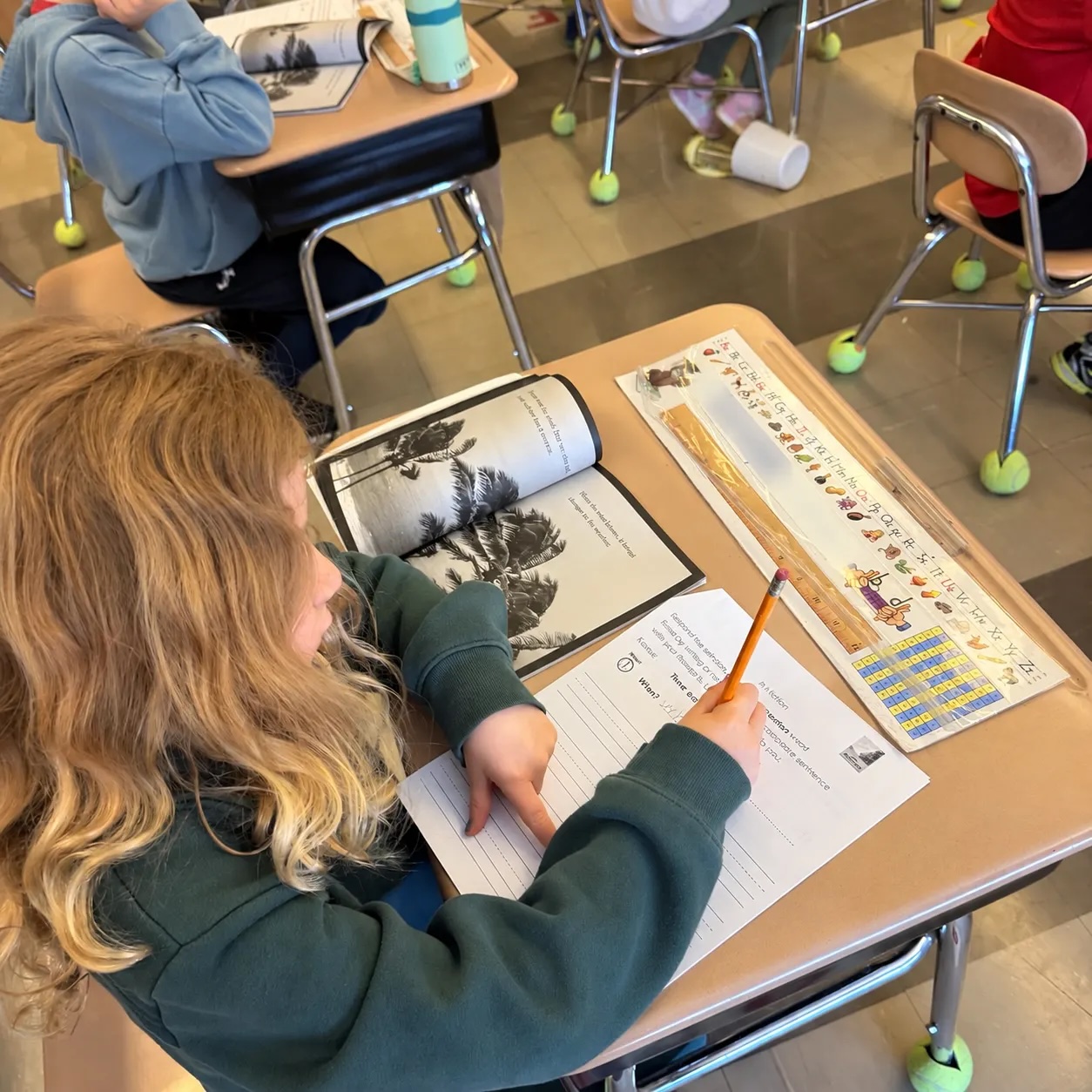
“Excessive screen time can have as detrimental an impact on learning as growing up in poverty. That insight alone should prompt school leaders to re-examine the level of device dependency in their classrooms.”
-Dr. Greg Taranto and Dr. Mark Abbondanza, Canon-McMillan School District
Placing students in front of screens is preventing students from gaining critical life-long skills like learning how to communicate effectively, collaborate with others, listen to and agree or disagree with opposing viewpoints, and most importantly, develop social skills.
We must protect and preserve the human thought process. Why are we one of the few school districts pushing back against the dominant ed-tech narrative? Largely because ed-tech companies heavily influence professional organizations and conferences through sponsorships and programmed topics.
We need more school leaders who are willing to swim against ed-tech’s massive current. The more of us who swim together, the better equipped we will be to dismantle the false claim that technology is an automatic equalizer or a prerequisite for future readiness. It has not delivered on those promises. What truly delivers is an environment that fosters independent thinkers—students with a strong knowledge base who are capable of solving complex problems on their own.
Greg Taranto, Ph.D.
Superintendent
Canon-McMillan School District
Mark Abbondanza, Ph.D.
Assistant to the Superintendent for Grades K-6
Canon-McMillan School District
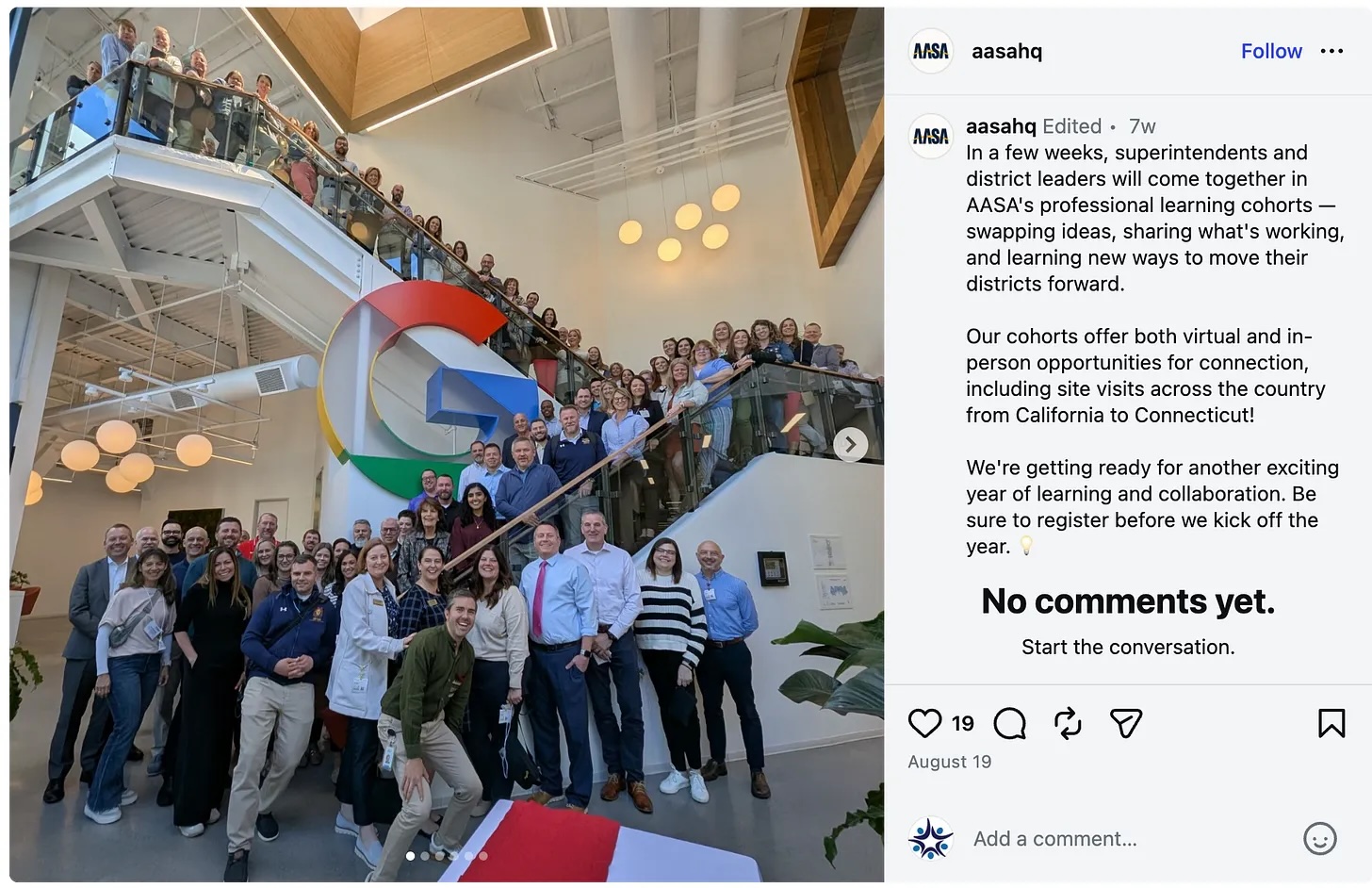
Screenshot of an Instagram post by the School Superintendents’ Association (AASA) with a group of “superintendents and district leaders” posing in front a giant Google logo
1 I do want to acknowledge that there are private and faith-based schools who have made the shift to go low-tech (or some schools that always were low-tech), including the first Tech-Intentional Certified School in the world, Manhattan Day School. I applaud the leaders at these schools for knowing that teaching and learning looks like minimal tech-product use and for centering children and educators. They are absolutely role models for what is possible. But private and religious schools can be relatively nimble when it comes to making changes quickly compared to public school districts which sometimes educate tens of thousands of children within a massive bureaucracy. Until I met Greg Taranto, I was not aware of any full public school districts that had started rolling back EdTech like he had. If there are others out there, please let me know.
This blog post has been shared by permission from the author.
Readers wishing to comment on the content are encouraged to do so via the link to the original post.
Find the original post here:
The views expressed by the blogger are not necessarily those of NEPC.