Daily Kos: Teaching the 25th Anniversary of 9/11
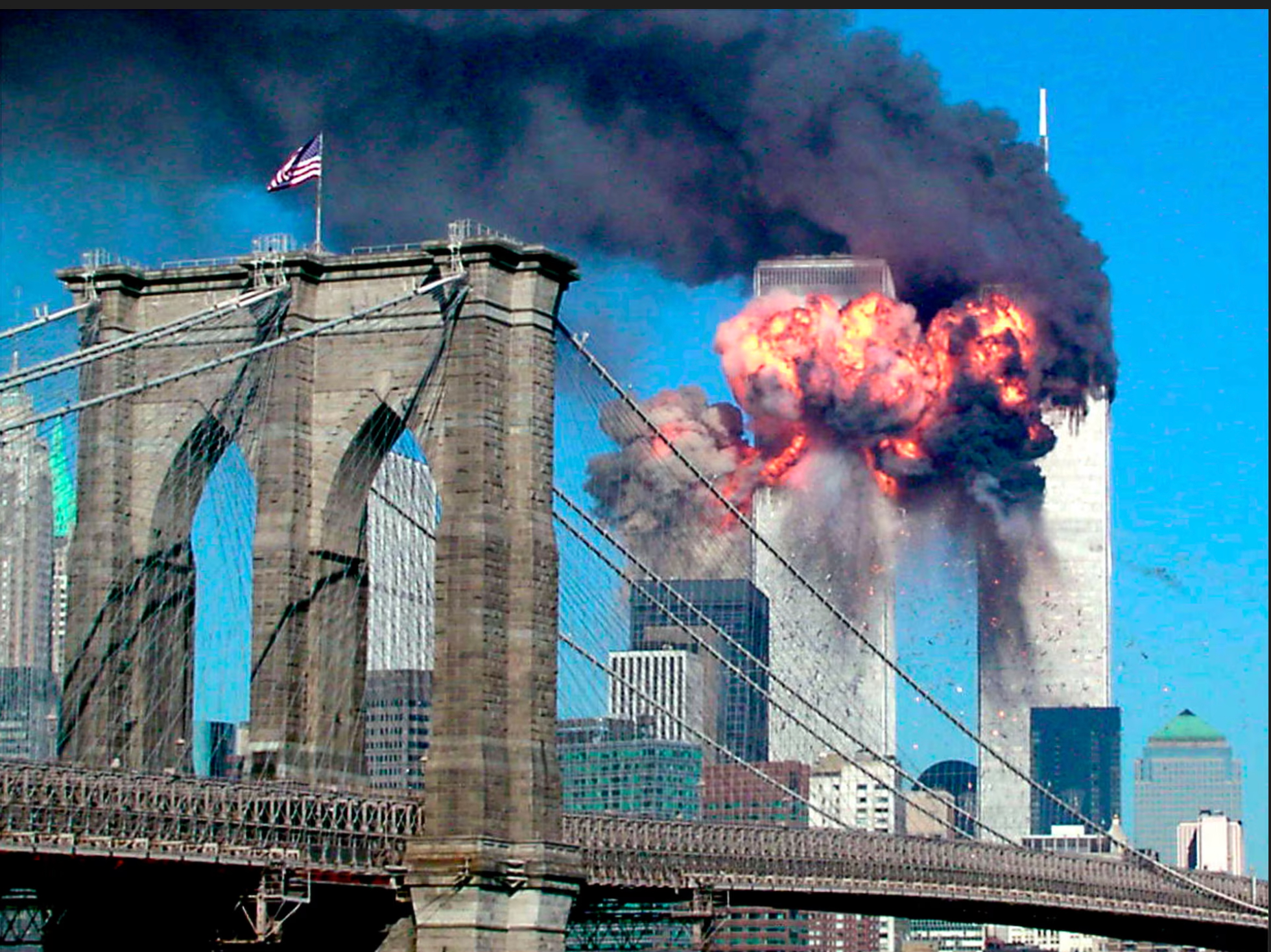
Friday, September 11, 2026 is the twenty-fifth anniversary of the aerial attacks on the World Trade Center and the Pentagon. By law, New York State public schools must observe a brief period of silent reflection at the start of the school day. The State Education Department and the 9/11 Memorial & Museum provide multi-grade teaching resources but specific lesson plans are up to local school districts. The New York State teachers union developed a series of lessons for the tenth anniversary of 9/11.
For many teachers, the attacks on 9/11 and the aftermath were major events in their lives. However, for today’s students, the attacks on 9/11 have been relegated to the past along with the bombing of Fort Sumter in April 1861 and the attack on Pearl Harbor, December 7, 1941, what President Franklin D. Roosevelt called a “day that will live in infamy.” Memories fade and impact wanes, the question becomes what should be the focus of instruction on the anniversary of 9/11?
Social studies teachers have an especially crucial role to play because of our skill in addressing sensitive and controversial issues in the classroom. In 2007, I conducted a workshop on the significance of 9/11 for ninth graders who were nine years old at the time of the attacks. None of them remembered the events that day although they later learned about them. In 2025, other than children whose families suffered personal loss at the time and have discussed it with them, 9/11, if remembered at all, is only a historic event.
We live a politically contentious time. For younger students, lessons can focus on how following the attacks on 9/11, the people across the United States rallied and stood together. They can also learn how people risked and sacrificed their own lives to help rescue others. A very compelling story is the man in the red bandana. Welles Crowther of Nyack, New York worked in an office on the 104th floor of the South Tower of the World Trade Center. After rescuing two groups of survivors, Crowthers went back upstairs to help others and did not make it out. He personally saved eighteen people. One of the survivors, Judy Wein, in a New York Times interview, told about being rescued by a “mysterious man” whose “mouth and nose” were “covered with a red handkerchief” – Welles Crowther, the man in a red bandana. There is a children’s picture book and 56-minutes long documentary about 9/11 and Welles Crowder.
For a stand-alone middle and high school lesson, students can read and discuss documents 1 and 2 with supportive video. Document 1 is a news report from the New York Times. Document 2 is an excerpt from an article that includes interviews with survivors.
In eleventh grade, as part of the end of the year curriculum, teachers can engage students in an evaluation of U.S. foreign and military policy. There were no weapons of mass destruction in Iraq or Afghanistan and the invasion and military occupation did not lead to creation of stable democratic governments. In Iraqi, civilians derisively demanded to know “Maki Kahraba,” “Where is the electricity?” The War on Terrorism, a war without end undermined the United States’ international stature and produced more terrorists than it eliminated. This is an especially important topic because the United States is now involved in another prolonged war in the region that undermines stability there, has weakened the American military, and threatens the global economy.
Few high school students are ever exposed to critical analyses of United States foreign policy, which leaves them completely unable to evaluate the standard narrative presented in school and the media that somehow the United States is different from other nations, a shining democratic “city on the hill” for others to emulate and the defender of freedom around the world.
Document 1. Hijacked Jets Destroy Twin Towers and Hit Pentagon
Source: Serge Schmemann, New York Times, September 12, 2001, pg 1
A. Hijackers rammed jetliners into each of New York’s World Trade Center towers yesterday, toppling both in a hellish storm of ash, glass, smoke and leaping victims, while a third jetliner crashed into the Pentagon in Virginia. There was no official count, but President Bush said thousands had perished, and in the immediate aftermath the calamity was already being ranked the worst and most audacious terror attack in American history. The attacks seemed carefully coordinated. The hijacked planes were all en route to California, and therefore gorged with fuel, and their departures were spaced within an hour and 40 minutes.
B. In all, 266 people perished in the four planes and several score more were known dead elsewhere. Numerous firefighters, police officers and other rescue workers who responded to the initial disaster in Lower Manhattan were killed or injured when the buildings collapsed. Hundreds were treated for cuts, broken bones, burns and smoke inhalation. But the real carnage was concealed for now by the twisted, smoking, ash-choked carcasses of the twin towers, in which thousands of people used to work on a weekday. The collapse of the towers caused another World Trade Center building to fall 10 hours later, and several other buildings in the area were damaged or aflame. C. For hours after the attacks, rescuers were stymied by other buildings that threatened to topple. But by 11 p.m., rescuers had been able to begin serious efforts to locate and remove survivors. Mr. Giuliani [New York City Mayor Rudolph Giuliani] said two Port Authority police officers had been pulled from the ruins, and he said hope existed that more people could be saved. Earlier, police officer volunteers using dogs had found four bodies in the smoldering, stories-high pile of rubble where the towers had once stood and had taken them to a makeshift morgue in the lobby of an office building at Vesey and West Streets.
D. Within an hour of the attacks, the United States was on a war footing. The military was put on the highest state of alert, National Guard units were called out in Washington and New York and two aircraft carriers were dispatched to New York harbor. President Bush remained aloft in Air Force One, following a secretive route and making only brief stopovers at Air Force bases in Louisiana and Nebraska before finally setting down in Washington at 7 p.m. His wife and daughters were evacuated to a secure, unidentified location. The White House, the Pentagon and the Capitol were evacuated, except for the Situation Room in the White House where Vice President Cheney remained in charge, giving the eerie impression of a national capital virtually stripped of its key institutions.
Questions
1. What happened to the World Trade Center in New York City?
2. Why was it difficult to assess the amount of damage and the number of people injured or dead?
3. In your opinion, why was the United States put on an immediate war footing?
Document 2. Fighting to Live as the Towers Died
These are excerpts from an article reported on and written by Jim Dwyer, Eric Lipton, Kevin Flynn, James Glanz and Ford Fessenden, New York Times, May 26, 2002. In the interviews we learn about the man in the red bandana. https://www.nytimes.com/2002/05/26/nyregion/fighting-to-live-as-the-tow…
Even though the buildings survived the initial impacts, the twisting and bending of the towers caused fatal havoc. Stairwells were plugged by broken wallboard. Doors were jammed in twisted frames. With more time and simple tools like crowbars, rescue workers might have freed people who simply could not get to stairways. In the north tower, at least 28 people were freed on the 86th and 89th floors by a small group of Port Authority office workers who pried open jammed doors. Those self-assigned rescuers died. In both towers, scores of people lost chances to escape. Some paused to make one more phone call; others, to pick up a forgotten purse; still others, to perform tasks like freeing people from elevators, tending the injured or comforting the distraught.
Both towers had similar volumes of smoke and heat, but in the north tower, about three times as many people were trapped in roughly half the space. Scores were driven to the windows of the north tower in search of relief. In the south tower, people had more opportunities to move between floors. In all, about 600 civilians died in the south tower at or above the plane’s impact. In the north tower, every person believed to be above the 91st floor died: 1,344.
The farther from the impact, the more calls people made. In the north tower, pockets of near-silence extended four floors above and one floor below the impact zone. Yet remarkably, in both towers, even on floors squarely hit by the jets, a few people lived long enough to make calls. For a few, survival came from having leaned into an alcove. Death could come from having stepped back from a crowded elevator door.
As Ms. Wein came to, she had her own battered body to deal with: her right arm was broken, three ribs were cracked and her right lung had been punctured. In other words, she was lucky. All around her were people with horrific injuries, dead or close to it. Ms. Wein yelled out for her boss, Mr. Kestenbaum. When she found him, she said, he was expressionless, motionless, silent. And Richard Gabrielle, another Aon colleague, was pinned to the ground, his legs apparently broken by marble that had fallen on them. Ms. Wein tried to move the stone. Mr. Gabrielle cried out from pain, she said, and told her to stop.
A mysterious man appeared at one point, his mouth and nose covered with a red handkerchief. He was looking for a fire extinguisher. As Judy Wein recalls, he pointed to the stairs and made an announcement that saved lives: Anyone who can walk, get up and walk now. Anyone who can perhaps help others, find someone who needs help and then head down. In groups of two and three, the survivors struggled to the stairs. A few flights down, they propped up debris blocking their way, leaving a small passageway to slip through.
A few minutes behind this group was Ling Young, who also survived the impact in the sky lobby. She, too, said she had been steered by the man in the red bandanna, hearing him call out: “This way to the stairs.” He trailed her down the stairs. Ms. Young said she soon noticed that he was carrying a woman on his back. Once they reached clearer air, he put her down and went back up. Of the dozens of people waiting in the sky lobby when the second plane struck, 12 are known to have made it out alive.
Questions
1. Why were some people able to survive the impact of the planes on the two towers of the World Trade Center?
2. How did the man in the red bandana help people survive?
3. If you were there, would you have been able to do what he did? Explain.
Document 3. President George W. Bush Addresses the Nation, September 11, 2001
Source: http://www.americanrhetoric.com/speeches/gwbush911addresstothenation.htm
A. Today, our fellow citizens, our way of life, our very freedom came under attack in a series of deliberate and deadly terrorist acts. The victims were in airplanes or in their offices: secretaries, businessmen and women, military and federal workers, moms and dads, friends and neighbors. Thousands of lives were suddenly ended by evil, despicable acts of terror. The pictures of airplanes flying into buildings, fires burning, huge – huge structures collapsing have filled us with disbelief, terrible sadness, and a quiet, unyielding anger. These acts of mass murder were intended to frighten our nation into chaos and retreat. But they have failed. Our country is strong.
B. A great people has been moved to defend a great nation. Terrorist attacks can shake the foundations of our biggest buildings, but they cannot touch the foundation of America. These acts shatter steel, but they cannot dent the steel of American resolve. America was targeted for attack because we’re the brightest beacon for freedom and opportunity in the world. And no one will keep that light from shining. Today, our nation saw evil – the very worst of human nature – and we responded with the best of America. With the daring of our rescue workers, with the caring for strangers and neighbors who came to give blood and help in any way they could.
C. Immediately following the first attack, I implemented our government’s emergency response plans. Our military is powerful, and it’s prepared. Our emergency teams are working in New York City and Washington D.C. to help with local rescue efforts. Our first priority is to get help to those who have been injured, and to take every precaution to protect our citizens at home and around the world from further attacks. The functions of our government continue without interruption. Federal agencies in Washington which had to be evacuated today are reopening for essential personnel tonight and will be open for business tomorrow. Our financial institutions remain strong, and the American economy will be open for business as well.
D. The search is underway for those who were behind these evil acts. I have directed the full resources of our intelligence and law enforcement communities to find those responsible and to bring them to justice. We will make no distinction between the terrorists who committed these acts and those who harbor them. I appreciate so very much the members of Congress who have joined me in strongly condemning these attacks. And on behalf of the American people, I thank the many world leaders who have called to offer their condolences and assistance. America and our friends and allies join with all those who want peace and security in the world, and we stand together to win the war against terrorism. Tonight, I ask for your prayers for all those who grieve, for the children whose worlds have been shattered, for all whose sense of safety and security has been threatened.
E. This is a day when all Americans from every walk of life unite in our resolve for justice and peace. America has stood down enemies before, and we will do so this time. None of us will ever forget this day, yet we go forward to defend freedom and all that is good and just in our world.
Questions
1. Why does President Bush believe the attacks on the United States will fail?
2. What did President Bush do to secure the safety of the American people?
3. According to President Bush, what are the goals of the United States following the attack?
Document 4. New York City Mayor Rudolph Giuliani Addresses the United Nations, October 1, 2001
Source: http://www.americanrhetoric.com/speeches/rudygiuliani911unitednations.h…
A. On September 11th 2001, New York City — the most diverse City in the world — was viciously attacked in an unprovoked act of war. More than five thousand innocent men, women, and children of every race, religion, and ethnicity are lost. Among these were people from 80 different nations. To their representatives here today, I offer my condolences to you as well on behalf of all New Yorkers who share this loss with you. This was the deadliest attack — terrorist attack in history. It claimed more lives than Pearl Harbor or D-Day.
B. This was not just an attack on the City of New York or on the United States of America. It was an attack on the very idea of a free, inclusive, and civil society. It was a direct assault on the founding principles of the United Nations itself . . . Indeed this vicious attack places in jeopardy the whole purpose of the United Nations.
C. Terrorism is based on the persistent and deliberate violation of fundamental human rights. With bullets and bombs, and now with hijacked airplanes, terrorists deny the dignity of human life. Terrorism preys particularly on cultures and communities that practice openness and tolerance. Their targeting of innocent civilians mocks the efforts of those who seek to live together in peace as neighbors. It defies the very notion of being a neighbor. This massive attack was intended to break our spirit. It has not done that. It’s made us stronger, more determined, and more resolved.
D. The strength of America’s response . . . flows from the principles upon which we stand. Americans are not a single ethnic group. Americans are not of one race or one religion. Americans emerged from all of your nations. We’re defined as Americans by our beliefs, not by our ethnic origins, our race or our religion. Our belief in religious freedom, political freedom, economic freedom — that’s what makes an American. Our belief in democracy, the rule of law, and respect for human life — that’s how you become an American. It’s these very principles and the opportunities these principles give to so many to create a better life for themselves and their families that make America and New York a shining city on a hill. There’s no nation in the history of the world and no city that has seen more immigrants in less time than America. And people continue to come here in large, large numbers to seek freedom, opportunity, decency, [and] civility.
E. It’s tragic and perverse that it’s because of these very principles, particularly our religious, political, and economic freedoms, that we find ourselves under attack by terrorists. Our freedom threatens them, because they know if our ideas of freedom gain a foothold among their people, it will destroy their power. So they strike out against us to keep those ideas from reaching their people. The best long-term deterrent and approach to terrorism, obviously, is the spread of the principles of freedom and democracy and the rule of law and respect for human life.
Questions
1. Why does Mayor Rudolph Giuliani consider 9/11 an attack on the principle of freedom?
2. According to Giuliani, what are the great strengths of the United States as it confronts this crisis?
3. In your opinion, why did Giuliani make this address at the United Nations?
Document 5. President George W. Bush’s “Afghanistan Speech”, October 7, 2001
Source: http://www.americanrhetoric.com/speeches/gwbush911intialafghanistanops…
A. On my orders, the United States military has begun strikes against al-Qaeda terrorist training camps and military installations of the Taliban regime in Afghanistan. These carefully targeted actions are designed to disrupt the use of Afghanistan as a terrorist base of operations and to attack the military capability of the Taliban regime. We are supported by the collective will of the world.
B. More than two weeks ago, I gave Taliban leaders a series of clear and specific demands: Close terrorist training camps. Hand over leaders of the al-Qaeda network, and return all foreign nationals, including American citizens unjustly detained in your country. None of these demands were met. And now, the Taliban will pay a price.
C. By destroying camps and disrupting communications, we will make it more difficult for the terror network to train new recruits and coordinate their evil plans. Initially, the terrorists may burrow deeper into caves and other entrenched hiding places. Our military action is also designed to clear the way for sustained, comprehensive and relentless operations to drive them out and bring them to justice. At the same time, the oppressed people of Afghanistan will know the generosity of America and our allies. As we strike military targets, we will also drop food, medicine and supplies to the starving and suffering men and women and children of Afghanistan.
D. The United States of America is a friend to the Afghan people, and we are the friends of almost a billion worldwide who practice the Islamic faith. The United States of America is an enemy of those who aid terrorists and of the barbaric criminals who profane a great religion by committing murder in its name. This military action is a part of our campaign against terrorism, another front in a war that has already been joined through diplomacy, intelligence, the freezing of financial assets and the arrests of known terrorists by law enforcement agents in 38 countries. Given the nature and reach of our enemies, we will win this conflict by the patient accumulation of successes, by meeting a series of challenges with determination and will and purpose.
E. Today we focus on Afghanistan, but the battle is broader. Every nation has a choice to make. In this conflict, there is no neutral ground. If any government sponsors the outlaws and killers of innocence, they have become outlaws and murderers themselves. And they will take that lonely path at their own peril.
F. We’re a peaceful nation. Yet, as we have learned, so suddenly and so tragically, there can be no peace in a world of sudden terror. In the face of today’s new threat, the only way to pursue peace is to pursue those who threaten it. We did not ask for this mission, but we will fulfill it. The name of today’s military operation is Enduring Freedom. We defend not only our precious freedoms, but also the freedom of people everywhere to live and raise their children free from fear.
Questions
1. What military actions were ordered by President Bush?
2. Why did the United States and its allies take these actions?
3. What is the broader struggle identified by President Bush?
4. In your opinion, what did President Bush mean when he stated: “In this conflict, there is no neutral ground.” Do you agree or disagree? Explain.
Document 6. Senator Robert Byrd Fears for the Future, February 12, 2003
Source: http://www.commondreams.org/views03/0212-07.htm
A. To contemplate war is to think about the most horrible of human experiences. On this February day, as this nation stands at the brink of battle, every American on some level must be contemplating the horrors of war. Yet, this Chamber is, for the most part, silent – ominously, dreadfully silent. There is no debate, no discussion, no attempt to lay out for the nation the pros and cons of this particular war. There is nothing. We stand passively mute in the United States Senate, paralyzed by our own uncertainty, seemingly stunned by the sheer turmoil of events. Only on the editorial pages of our newspapers is there much substantive discussion of the prudence or imprudence of engaging in this particular war. And this is no small conflagration we contemplate. This is no simple attempt to defang a villain. No. This coming battle, if it materializes, represents a turning point in U.S. foreign policy and possibly a turning point in the recent history of the world.
B. This nation is about to embark upon the first test of a revolutionary doctrine applied in an extraordinary way at an unfortunate time. The doctrine of preemption – the idea that the United States or any other nation can legitimately attack a nation that is not imminently threatening but may be threatening in the future – is a radical new twist on the traditional idea of self-defense. It appears to be in contravention of international law and the UN Charter. And it is being tested at a time of world-wide terrorism, making many countries around the globe wonder if they will soon be on our – or some other nation’s – hit list.
C. High-level Administration figures recently refused to take nuclear weapons off of the table when discussing a possible attack against Iraq. What could be more destabilizing and unwise than this type of uncertainty, particularly in a world where globalism has tied the vital economic and security interests of many nations so closely together? There are huge cracks emerging in our time-honored alliances, and U.S. intentions are suddenly subject to damaging worldwide speculation. Anti-Americanism based on mistrust, misinformation, suspicion, and alarming rhetoric from U.S. leaders is fracturing the once solid alliance against global terrorism which existed after September 11.
D. One can understand the anger and shock of any President after the savage attacks of September 11. One can appreciate the frustration of having only a shadow to chase and an amorphous, fleeting enemy on which it is nearly impossible to exact retribution. But to turn one’s frustration and anger into the kind of extremely destabilizing and dangerous foreign policy debacle that the world is currently witnessing is inexcusable from any Administration charged with the awesome power and responsibility of guiding the destiny of the greatest superpower on the planet. Frankly many of the pronouncements made by this Administration are outrageous. There is no other word.
E. Yet this chamber is hauntingly silent. On what is possibly the eve of horrific infliction of death and destruction on the population of the nation of Iraq a – population, I might add, of which over 50% is under age 15 – this chamber is silent. On what is possibly only days before we send thousands of our own citizens to face unimagined horrors of chemical and biological warfare – this chamber is silent. On the eve of what could possibly be a vicious terrorist attack in retaliation for our attack on Iraq, it is business as usual in the United States Senate. We are truly “sleepwalking through history.” In my heart of hearts I pray that this great nation and its good and trusting citizens are not in for a rudest of awakenings.
Questions
1. Why is Senator Byrd concerned about the “doctrine of preemption”?
2. Why does Senator Byrd believe going to war with Iraq is a mistake?
3. In your opinion, why does Senator Byrd accuse the Senate and the American people of “sleepwalking through history”?
Document 7. Representative Barbara Lee of California, September 14, 2001 (Source: Congressional Record)
I rise today with a heavy heart, one that is filled with sorrow for the families and loved ones who were killed and injured in New York, Virginia, and Pennsylvania. Only the most foolish or the most callous would not understand the grief that has gripped the American people and millions across the world. This unspeakable attack on the United States has forced me to rely on my moral compass, my conscience, and my God for direction. … September 11 changed the world. Our deepest fears now haunt us. Yet I am convinced that military action will not prevent further acts of international terrorism against the United States. I know that this use-of-force resolution will pass although we all know that the President can wage a war even without this resolution. However difficult this vote may be, some of us must urge the use of restraint.
Questions
1. How does Representative Lee open her speech?
2. Why does Representative Lee decide to oppose the authorization for war?
Document 8. Orlando and Phyllis Rodriguez “Not in Our Son’s Name” (Source: Zinn Education Project)
The Rodriguez’s son, Gregory, died when hijackers flew two planes into the World Trade Center. Gregory was thirty-one years old and working on the 103rd floor of one World Trade Center. The Rodriguez family sent this open letter to the New York Times and other papers after the attack.
Our son Greg is among the many missing from the World Trade Center attack. Since we first heard the news, we have shared moments of grief, comfort, hope, despair, fond memories with his wife, the two families, our friends and neighbors, his loving colleagues at Cantor Fitzgerald/ESpeed, and all the grieving families that daily meet at the Pierre Hotel. We see our hurt and anger reflected among everybody we meet. We cannot pay attention to the daily flow of news about this disaster. But we read enough of the news to sense that our government is heading in the direction of violent revenge, with the prospect of sons, daughters, parents, friends in distant lands, dying, suffering, and nursing further grievances against us. It is not the way to go. It will not avenge our son’s death. Not in our son’s name. Our son died a victim of an inhuman ideology. Our actions should not serve the same purpose. Let us grieve. Let us reflect and pray. Let us think about a rational response that brings real peace and justice to our world. But let us not as a nation add to the inhumanity of our times.
Questions
1. Who are Orlando and Phyllis Rodriguez?
2. Why did they write this letter to the New York Times?
3. What is their plea to the United States government?
Document 9. American Civil Liberties Union Criticizes the USA Patriot Act, April 3, 2003
Source: http://www.aclu.org/national-security/surveillance-under-usa-patriot-act
A. Just six weeks after the September 11 attacks, a panicked Congress passed the “USA/Patriot Act,” an overnight revision of the nation’s surveillance laws that vastly expanded the government’s authority to spy on its own citizens, while simultaneously reducing checks and balances on those powers like judicial oversight, public accountability, and the ability to challenge government searches in court. Most of the changes to surveillance law made by the Patriot Act were part of a longstanding law enforcement wish list that had been previously rejected by Congress, in some cases repeatedly. Congress reversed course because it was bullied into it by the Bush Administration in the frightening weeks after the September 11 attack.
B. The Patriot Act increases the governments surveillance powers in four areas:
- Records searches. It expands the government’s ability to look at records on an individual’s activity being held by a third parties.
- Secret searches. It expands the government’s ability to search private property without notice to the owner.
- Intelligence searches. It expands a narrow exception to the Fourth Amendment that had been created for the collection of foreign intelligence information.
- “Trap and trace” searches. It expands another Fourth Amendment exception for spying that collects “addressing” information about the origin and destination of communications, as opposed to the content.
C. One of the most significant provisions of the Patriot Act makes it far easier for the authorities to gain access to records of citizens’ activities being held by a third party. At a time when computerization is leading to the creation of more and more such records, Section 215 of the Patriot Act allows the FBI to force anyone at all – including doctors, libraries, bookstores, universities, and Internet service providers – to turn over records on their clients or customers . . . The result is unchecked government power to rifle through individuals’ financial records, medical histories, Internet usage, bookstore purchases, library usage, travel patterns, or any other activity that leaves a record . . . The government no longer has to show evidence that the subjects of search orders are an “agent of a foreign power,” a requirement that previously protected Americans against abuse of this authority. The FBI does not even have to show a reasonable suspicion that the records are related to criminal activity, much less the requirement for “probable cause” that is listed in the Fourth Amendment to the Constitution. All the government needs to do is make the broad assertion that the request is related to an ongoing terrorism or foreign intelligence investigation.
D. For centuries, common law has required that the government can’t go into your property without telling you, and must therefore give you notice before it executes a search. That “knock and announce” principle has long been recognized as a part of the Fourth Amendment to the Constitution. The Patriot Act, however, unconstitutionally amends the Federal Rules of Criminal Procedure to allow the government to conduct searches without notifying the subjects, at least until long after the search has been executed. This means that the government can enter a house, apartment or office with a search warrant when the occupants are away, search through their property, take photographs, and in some cases even seize property – and not tell them until later . . . Under the Patriot Act, the FBI can secretly conduct a physical search or wiretap on American citizens to obtain evidence of crime without proving probable cause, as the Fourth Amendment explicitly requires.
E. The Patriot Act gives the attorney general unprecedented new power to determine the fate of immigrants. The attorney general can order detention based on a certification that he or she has “reasonable grounds to believe” a non-citizen endangers national security. Worse, if the foreigner does not have a country that will accept them, they can be detained indefinitely without trial.
Questions
1. What was the purpose of the USA/Patriot Act?
2. How did the USA/Patriot Act change government surveillance policies and practices?
3. Why is the ACLU critical of the USA/Patriot Act?
Document 10. Chalmers Johnson Sees Blowback
Source: http://www.tomdispatch.com/post/160594/
Chalmers Johnson (1931-2010) was a professor of Asian Studies at the University of California, San Diego. From 1968 until 1972 he was a consultant to the Office of National Estimates of the Central Intelligence Agency on Asian Affairs. He is the author of a number of books on U.S. military and foreign policy.
A. I had set out to explain how exactly our government came to be so hated around the world. As a CIA term of tradecraft, “blowback” does not just mean retaliation for things our government has done to, and in, foreign countries. It refers specifically to retaliation for illegal operations carried out abroad that were kept totally secret from the American public. These operations have included the clandestine overthrow of governments various administrations did not like, the training of foreign militaries in the techniques of state terrorism, the rigging of elections in foreign countries, interference with the economic viability of countries that seemed to threaten the interests of influential American corporations, as well as the torture or assassination of selected foreigners. The fact that these actions were, at least originally, secret meant that when retaliation does come — as it did so spectacularly on September 11, 2001 — the American public is incapable of putting the events in context. Not surprisingly, then, Americans tend to support speedy acts of revenge intended to punish the actual, or alleged, perpetrators. These moments of lashing out, of course, only prepare the ground for yet another cycle of blowback.
B. I then began doing research on the network of 737 American military bases we maintained around the world (according to the Pentagon’s own 2005 official inventory). Not including the Iraq and Afghanistan conflicts, we now station over half a million U.S. troops, spies, contractors, dependents, and others on military bases located in more than 130 countries, many of them presided over by dictatorial regimes that have given their citizens no say in the decision to let us in.
C. As our occupations of Afghanistan and Iraq turned into major fiascoes, discrediting our military leadership, ruining our public finances, and bringing death and destruction to hundreds of thousands of civilians in those countries, I continued to ponder the issue of empire. In these years, it became ever clearer that George W. Bush, Dick Cheney, and their supporters were claiming, and actively assuming, powers specifically denied to a president by our Constitution. It became no less clear that Congress had almost completely abdicated its responsibilities to balance the power of the executive branch. Despite the Democratic sweep in the 2006 election, it remains to be seen whether these tendencies can, in the long run, be controlled, let alone reversed.
D. Whether Americans intended it or not, we are now seen around the world as approving the torture of captives at Abu Ghraib prison in Iraq, at Bagram Air Base in Kabul, at Guantánamo Bay, Cuba, and at a global network of secret CIA prisons, as well as having endorsed Bush’s claim that, as commander-in-chief in “wartime,” he is beyond all constraints of the Constitution or international law. We are now saddled with a rigged economy based on record-setting trade and fiscal deficits, the most secretive and intrusive government in our country’s memory, and the pursuit of “preventive” war as a basis for foreign policy.
E. If we choose to keep our empire, as the Roman republic did, we will certainly lose our democracy and grimly await the eventual blowback that imperialism generates. There is an alternative, however. We could, like the British Empire after World War II, keep our democracy by giving up our empire . . . [T]he overall thrust of postwar British history is clear: the people of the British Isles chose democracy over imperialism.
Questions
1. According to Chalmers Johnson, why is the United States “hated around the world”?
2. What is “blowback”?
3. Why does Chalmers Johnson believe democracy in the United States is at risk?
4. In your opinion, does Chalmers Johnson support the United States response to 9/11? Explain.
This blog post has been shared by permission from the author.
Readers wishing to comment on the content are encouraged to do so via the link to the original post.
Find the original post here:
The views expressed by the blogger are not necessarily those of NEPC.
