10th Period: Highest Performing Ohio Charter Schools Still Have 30% Ds and Fs on State Report Card. Public School Districts Have 30% As.
Federal grant funding for so-called "high-performing" Charter Schools still go to schools whose state report card grades are D or F in 3 of 10 cases.
I’ve written a lot about how Ohio’s Charter School sector has epically failed Ohio’s school children for decades. Yet the federal government keeps shoveling money to them for some reason. The first $49.2 million of that grant funding has been opened up to 59 of 258 graded Ohio Charter Schools (only 20% of “Dropout Recovery” Charter Schools qualify, but I’ll deal with them later).
According to the state law about this federal grant, Charters that have a 4 or 5 star rating on Academic Progress and a 3, 4 or 5 star rating on overall test scores, or a meaningful increase in test scores over the last 3 years are eligible.
All but a couple of the qualifying Charters met this first of 4 criteria.
Great, right? I mean, these are supposed to be the kinds of Charter Schools we want to grow — high performing Charters.
Here’s the deal, though.
There are 7 graded metrics on the state report card. So while these Charter Schools — less than 1/4 of all Ohio Charter Schools — do have good grades in these two categories, they still really struggle in the other 5.
And Ohio School districts — 1/3 of whom would qualify for these federal funds if they were Charter Schools — do far, far better on those other metrics. How much better?
A sampling:
- Ohio’s qualifying Charter Schools still have 30% of their grades as 2 stars or 1 star — Ds or Fs in regular grading parlance. Meanwhile, 30% of Ohio’s qualifying School Districts’ grades are 5 stars — A’s for you and me.
- Only 12 of the 59 qualifying Charter Schools received grades in college, career and military readiness. All but 3 of those 12 schools scored 1 star for that component. Meanwhile, 72% of Ohio’s qualifying Public School Districts received a grade of 3 stars or more on that component.
- Only 1 in 5 Ohio Charter School students attend a “high-performing” Charter School under this definition. Meanwhile, every other Ohio Public School District student does (including every child attending the Cleveland Municipal School District1).
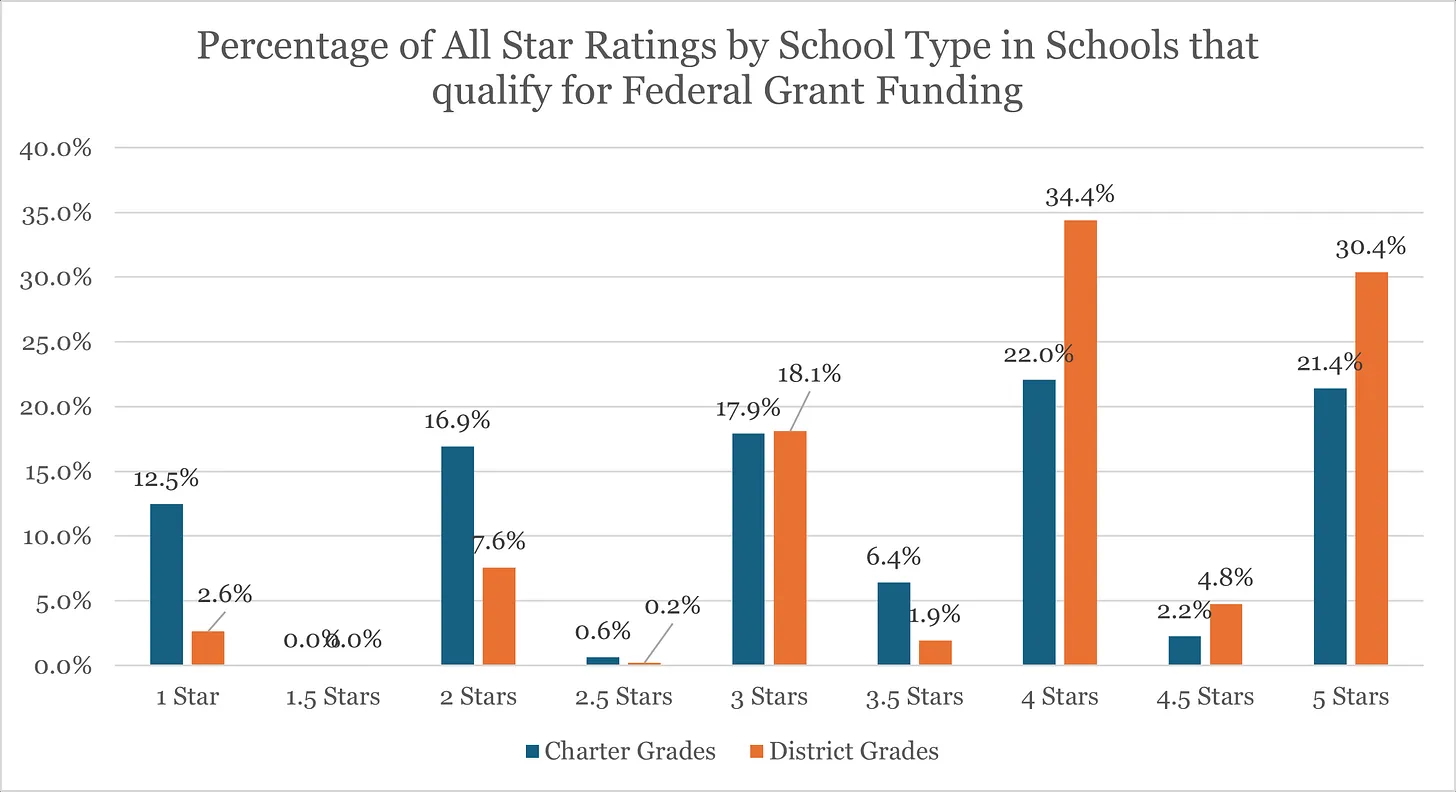
As you can see, Ohio’s Charter Schools — even the so-called “high-performing” ones don’t perform nearly as well overall as similarly rated Public School Districts.
This is a tactic Charter School proponents have tried for years — let’s only base “high-quality” Charter School designations on 1 or (maybe) 2 of the 7 graded metrics. Why? Because they know if “high-quality” designations were based on all 7 metrics, they’d be screwed. Only 6 of 258 graded Charter Schools received the 5-star overall designation, for example. Another 32 received 4 or 4.5-star ratings. So less than 15% received overall grades of A or B.
Meanwhile, 48% of Ohio’s Public School Districts received overall A or B grades.
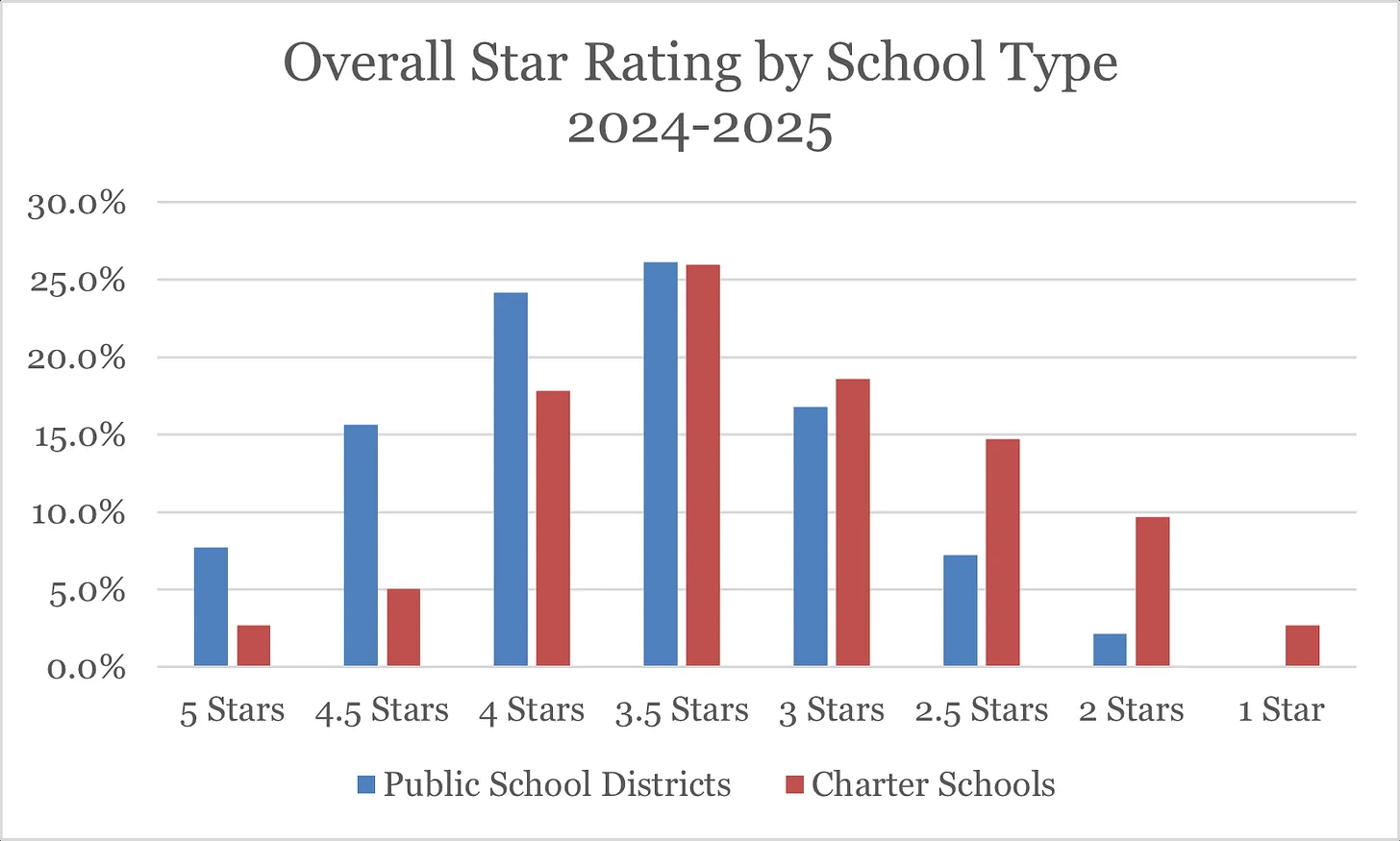
This doesn’t mean there aren’t honest-to-God, high-performing Charter Schools out there. There are. But, man, it’s just a handful of them. Maybe a couple dozen or so, tops.
So, I guess, let’s giving $49.2 million to schools that produce failing grades on 3 of every 10 measures rather than the schools that produce the highest grades on 3 of 10.
Makes sense.
Oh yeah. And let’s give them 214% more state funding per pupil too.
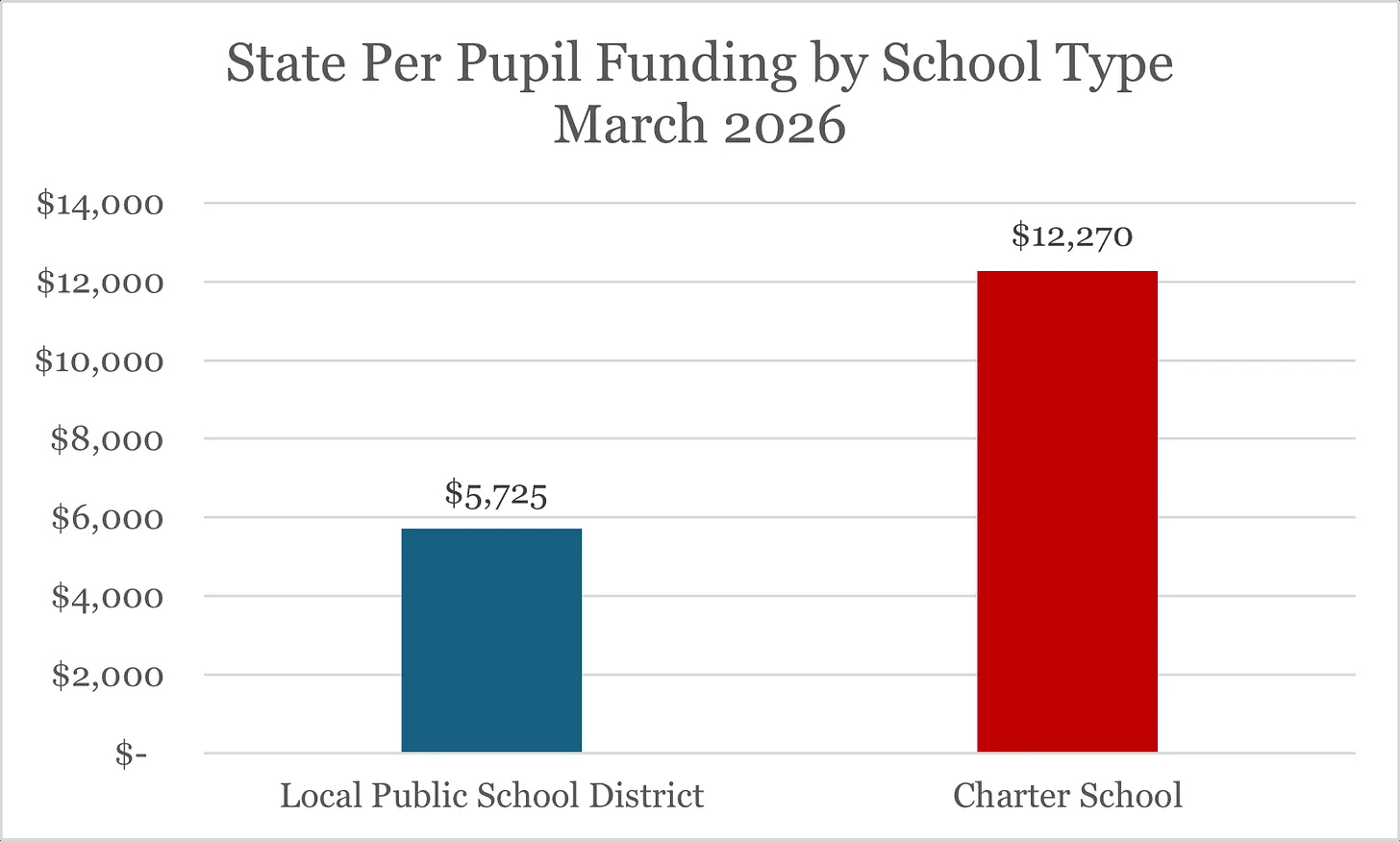
Because more money doesn’t matter.
At least that’s what the school choice advocates always used to claim (but may be changing? We’ll see.).
1 Cleveland would meet the requirement because it got a 4-star rating on progress and its performance index score increase by 5 points or more since the 2021-2022 Report Card.
This blog post has been shared by permission from the author.
Readers wishing to comment on the content are encouraged to do so via the link to the original post.
Find the original post here:
The views expressed by the blogger are not necessarily those of NEPC.