Tomorrow's Mess: I’m Shocked, Shocked! A Reformed Lobbyist on Whisper Campaigns
On Meta’s campaign to amplify Jonathan Haidt’s critics.
At the outset of this post, I want to be extremely clear that the views herein are 100% my own.
After verdicts in Los Angeles and New Mexico this spring, a fresh $25 billion judgment out of New Mexico this month, and the attorney general settlement for $17 billion a few months ago, Meta’s legal losses in court and in the court of public opinion continue to mount. But these cases above are not fully over: as I’ve written about before, thanks to whistleblowers and these court cases, we know that Meta has systematically abused attorney-client privilege designations in order to withhold evidence from the American people, and now a court has agreed. Tens of thousands of documents are being re-reviewed for privilege by a “special master,” a judge appointed to see what should actually now be released. It didn’t help Meta’s case with the judge that Meta made custom hats celebrating the abuse of privilege and the judge found out about it.
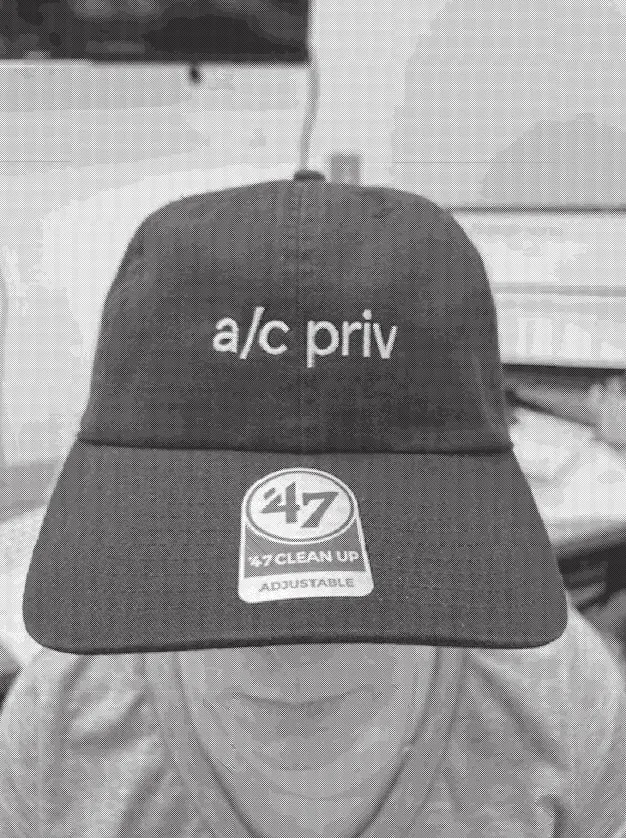
Among those documents now available to the public are meeting notes from an internal “well being” team at Meta that has been in the news this week. As The Guardian put it:
Meta staff discussed deploying a “whisper strategy” to undermine the influential US academic whose work has inspired a global social media crackdown, according to court documents. . . . Minutes from a meeting on 8 March 2023 mention “Curtiss”, an apparent reference to Meta’s then vice-president of research, Curtiss Cobb. It states: “Curtiss’s goal for this work: how do we get the academic community to disavow Haidt. Can’t co-opt them, so how do we enrage them … so the media finds him not credible.”
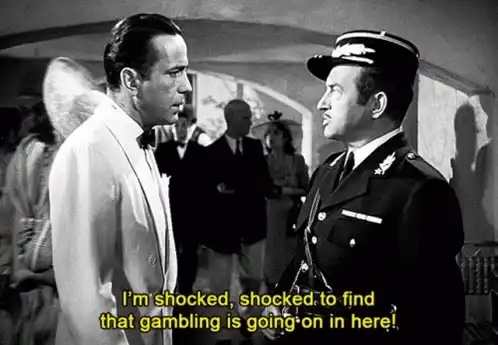
Most of us working on tech accountability issues had the same reaction to the news as Captain Renault’s famous response in Casablanca upon finding that gambling was taking place at Rick’s nightclub:
Now that the news has settled in a bit, some of Haidt’s critics have started to push back on the insinuation that they colluded with a toxic corporate benefactor.
Whether they did is in fact beside the point.
Below, I’m going to break down — based on my experience formerly in house at Amazon — how such a campaign would have worked, how such campaigns obstruct the policymaking process, why these critics’ responses are not compelling, and where we should go from here.
Because this is a long post, here is the tl;dr version:
- Meta would not have had to cut a check to academics in order for them to benefit from an arrangement where Meta amplifies their work and vice-versa; this is so common an arrangement that agents of influence have a term for it: “third-party validator.”
- The way in which these folks engage with policy debates, at a minimum, demonstrates unfamiliarity with how Meta and tech companies are abusing the policymaking process, and the role of their own scholarly work in abetting that abuse.
- Good faith criticism requires both better transparency about funding sources, acceptance of responsibility by scholars about how their work is used — and abused — in the policymaking process, and showing up when it matters with workable, viable solutions.
1. How Meta’s whisper campaign actually would have worked in practice
In 2017, when I led state tax policy for Amazon, a young lawyer named Lina Khan published a law review article titled, “Amazon’s Anti-Trust Paradox” that made waves in tech policy for arguing for a new approach to anti-trust enforcement that would target the company’s practices; Khan, of course, would rocket to wonk stardom and eventually be appointed to chair the FTC. Amazon — as is true of all sprawling tech companies — is terrified of antitrust enforcement, and, for a time at least, it was well-known throughout the company that Amazon’s legal chief David Zapolsky kept a white board in his office with a list of words like “market share” that were banned from use in internal emails for that very reason. Shortly after Khan’s paper made the rounds, some law professors approached Amazon, asking for support to publish a critique of Khan’s approach.1 The support was thus given, and once the paper was published, tech companies like Amazon and Google then made generous use of this paper in conversations with policymakers to rebut and undermine Khan’s arguments.
With this in mind, consider the following. In a heavily quoted line, this week’s released document has Meta’s staff explicitly admitting that “we can’t coopt them” (we being Meta, them being academic critics; this would seem to suggest it’s unlikely it was as simple as a quid pro quo between Meta and academics). But below that, further down the page, is a mention of an “opportunistic critics proposal.” At a minimum — again, we shall see what other receipts may eventually come out when more unethically withheld documents are released — this is where these scholars fit in: as “opportunistic critics.”
It was always unlikely that a company like Meta would seek out and offer to just cut a check in exchange for a takedown — although dumber things have happened. It would be to everyone’s benefit and easily achieved to keep direct fingerprints off of such an arrangement. (When tech companies do fund sympathetic research, it can be laundered through opaque intermediaries to obscure the origins; while not directly on point, see for example how Amazon set up a fake disability rights nonprofit in California.) As a former tech company lobbyist, what I read in this document that is being proposed is helping out such opportunistic critics, perhaps even in ways that would be invisible to the academics themselves.
Here’s one way in which this happens. A reporter wants to do a story on, say, a family suing Meta after their teen daughter was hospitalized after extreme weight loss due to anorexia following the daughter’s exposure on Meta platforms to extreme anorexia content (this has happened; and we know from Sarah Wynn-Williams’s book Careless People and her sworn Senate testimony that Instagram feeds beauty ads to teen girls after they delete a selfie.) The reporter calls Meta’s PR shop for comment. In addition to providing the normal stodgy corporate statement, Meta’s PR team also directs the reporter to a roster of its own favorite “experts.” 2
For a reporter at an outlet like the New York Times, which to a fault attempts to give equal weight to both sides of an issue and ends up platforming bad faith actors, this leads to these scholars’ work being quoted in the eventual piece. In influence game lingo, the scholar thus serves as a “third party validator” for Meta — yes, this is so common a tactic that agents of influence like lobbyists have a specific term for it.3 The validator also benefits from having his or her profile raised in kind — even if no money changes hands, and even if no direct contact was made between the company and the validator.
A synonym for the “opportunistic critic” in the Meta meeting notes is “conflict entrepreneur,” and that in my opinion can be used to describe some of Haidt’s critics, who appear to orient their work in opposition to his in a way that maximizes their exposure. (Again, many critics have been working on these issues for years, but that doesn’t mean they aren’t marketing their work this way in the press and on social media.) I won’t name names here, but if you so choose, have a look at replies on x.com to stories on this Meta news, and you’ll find a few examples of these folks there promoting themselves. Being a conflict entrepreneur can be an effective way to raise one’s profile, since we of course know — again from internal company documents — that narratives of conflict get more views on social media.
Let us also not forget that in addition to having well-resourced PR shops that can pitch reporters on their favored scholars’ work, tech companies like Meta also control a huge share of the information environment through which stories get amplified and spread or suppressed (see, e.g., Meta removing ads for attorneys working on social media cases). This is one area in which causality is impossible to prove, but that impossibility cuts both ways; separating conflict entrepreneurs’ amplified exposure causally from the substance of their work is impossible now that we have these meeting notes. Of course, the possibility that their work had help in getting attention will likely be received poorly by such entrepreneurs and may explain some of the reactions; as La Rochefoucauld wrote, “Pride does not wish to owe; vanity does not wish to pay.”
So denials from critics that they didn’t take money specifically to make a critique is beside the point to me; if that’s true, it’s still possible — even likely — that a campaign amplifying their work proceeded anyway, benefiting them indirectly, perhaps without their knowledge. That this may have happened even when Meta’s own well-resourced research internally supported other conclusions should be disturbing to academics interested in the pursuit of truth.
It’s worth noting that nowhere in these meeting notes does it appear that anyone in the meeting objected to the substance of Haidt’s claims; having been in similar meetings, correcting the record on something the company knew to be untrue would be core to the response rather than altogether absent.
2. Why ‘but I think Meta is bad too’ isn’t enough in America’s vetocracy
In his book Political Order and Political Decay, Francis Fukuyama makes the case that towards the end of the 20th century, America’s form of government had become what he called a vetocracy. Fukuyama argues that the Constitution’s checks and balances, a reliance on courts, and the capture of legislatures through organized interest groups have together produced a system in which any sufficiently well-funded interest group can block policy at one of many veto points, so that the state can neither act decisively for the majority nor reform itself. When nothing gets done to deal with problems, public trust in government erodes, which weakens the state further.
America’s tech giants uniquely benefit from a vetocracy, in large part but not only because of the impunity granted by Section 230 of the Communications Decency Act. Most large American businesses — say, pharma or car manufacturing or energy businesses — once they get to a certain size, end up in a symbiotic relationship with policy and regulators, whether it’s to secure regulatory approvals or in an attempt to secure regulatory capture. But because tech has largely remained unregulated, tech lobbyists have a unique mission: to preserve maximum legal and regulatory flexibility for their businesses. Because few laws with real teeth touch tech, these companies — maximizing shareholder value — have an obligation to prevent any laws from ever coming into force that would constrain them. Compromise isn’t in their vocabulary. To kill bills is their primary objective.
Here’s where the Merchants of Doubt strategy becomes particularly effective. Let’s say you are a state legislator, inundated with calls from parents and teachers who are your constituents and who are frustrated that they have lost all agency to control the role of technology in their kids’ lives. You experience this problem in your own home — your kid downloads a problematic app without your knowledge or permission, gets bullied on social media, etc. I hear this story all the time, directly from legislators, as to why they take these issues up.
Even if you as a legislator believe manipulative and exploitative tech designs are a problem for everyone, you will soon be well aware that the companies have weaponized the First Amendment to challenge any legislation that does pass and are spending the hundreds of millions of dollars on political donations and lobbyist contracts to convince your colleagues to do nothing. So, you want to draft something that exploits the curb-cut effect: you’ll start with protecting a vulnerable population that has broad bipartisan support, see if the policy intervention is successful, and learn and improve and expand from there. And when you consult all the policy experts you can on the matter — they are hard to find and not always responsive because they are poorly resourced relative to the companies and you may not even have staff support yourself — and draft a bill (the first of its kind, because tech has never been regulated before) — you are then hit with critical op-eds like this.
You haven’t heard from the op-ed’s author (again, this is a hypothetical, but based on reality), who hasn’t engaged with the policymaking process and has not offered helpful revisions, nuanced feedback, or a workable model of their own; but nonetheless, your committee chair through which your bill has to pass has accepted tech donations, and the doubt raised by the op-ed is all she needs to kill the bill so that it never gets a vote in committee. Because you spent all session perfecting the draft and wrangling votes; time runs out for the legislative session, and you have to wait to try again next year — if you even get the chance.
This is may be a hypothetical scenario, but it is an amalgamation of what has played out in Congress and in state capitals over and over again over the last half decade. This is the vetocracy in action — one op-ed, timed correctly, that offers critiques with no way forward shuts down any and all progress, to the benefit of companies like Meta. They intentionally exploit all of these veto points; I’ve seen done it myself while on the inside. This is how even a well-meaning, good faith objection can become another arrow in Meta’s quiver — and when it’s coordinated with a third-party validator tactic as above, it’s a shockingly effective strategy for making sure nothing gets done at all. And yet, with every legislative session that passes with no meaningful regulation of any kind, the companies’ power, wealth, and influence increases, making future interventions even more of an uphill climb.
This is so patently obvious to anyone actually engaged in the work that I find it hard to believe that critics who claim to believe Meta is problematic and that social media should be reformed are unaware that their work has a tendency to increase the political power of companies like Meta, simply by giving them sand to throw in the gears of the policymaking process.
It is more than just the perfect being the enemy of the good; it’s actively prolonging impunity and a lack of accountability for the company these critics claim to agree is a problem.
Why everyone should be pissed about this, and what to do if you are a critic suspected of collaborating
Whatever one makes of the evidence on adolescents and social media, the meeting notes should alarm everyone with a stake in that evidence. Here was the company with more data on teenage behavior than any university, a company whose own researchers had found causal evidence of harm, plotting how to turn the scholarly community against itself. These notes were written by people who regard the academy as something to be manipulated, not informing better policy or contributing to human knowledge.
Much like a slugger’s stats during the juicing era of baseball, every skeptical study now will carry an asterisk, like it or not. Every reporter and policymaker who reads a debunking should rightly question who amplified it and why. Meta has done to the research process what it has done to so much else it has touched: it has robbed the commons of trust. That should be the thing honest folks on every side rally against.
Good faith critique requires more than a denial of a quid pro quo here; it requires accepting some share of responsibility for what happens to a piece of scholarship once it enters the political arena. Want to help make better policy? Try saying, “yes, and” rather than “no” — “no” is the default position of the tech lobbyist. Try offering revisions instead of broadsides and putting forward a workable model of one’s own that is realistic politically. You might well find out, the way many of us grinding it out in state houses and in Congress have experienced first hand, going through revision after revision of legislative text, that this is a really hard needle to thread. Conflict may get you followers, but it can’t pass legislation. Getting stuff done requires compromise.
Good faith also means disclosure. At least the professors rebutting Lina Khan put Amazon’s support in a footnote on their first page, rather than waiting until after a judge released a damning document — only withheld because of ethical abuses in the first place — to consider acknowledging they’d received money.
These two things are, in my view, a pretty low bar — but it is a bar that is far from being met.
At the end of Casablanca, Captain Renault picks up a bottle of Vichy water, considers it, and drops it in the wastebasket. Then he walks off into the fog with Rick to join the fight. The invitation to academics interested in making the world online a better place for everyone is open. We’ll see if they keep drinking the Vichy water or join.
1 One thing worth remarking on is that Amazon’s support for the paper, admirably, is noted in the footnotes on the first page; the authors were not attempting to hide the ball. Contrast this with the current situation, in which it’s only after being confronted that some of these critics are admitting to having received funding from tech companies; it’s generally very difficult to find the sources of these scholars’ support, as similar acknowledgements are not included in their papers as far as I am aware.
2 It’s worth noting here that the meeting notes we have are from a Meta research team, presumably much more above-board in the way they conduct their business than Meta’s PR, policy, or legal teams. The fact that they are engaging in this tactic makes me shudder to think what unseen complementary tactics these other teams were engaged in — and note that the leaked document does make mention of “rolling into whatever comms is doing” so “it won’t be separate sets of asks” (e.g., presumably of reporters).
3 Another way tech companies do this is to amplify the voices of small business owners who have built their businesses around the platforms in a symbiotic relationship; any policymaker or journalist would rather get a quote from a mom-and-pop store than a corporate PR person, and it’s much the same with these scholars.
This blog post has been shared by permission from the author.
Readers wishing to comment on the content are encouraged to do so via the link to the original post.
Find the original post here:
The views expressed by the blogger are not necessarily those of NEPC.
