NEPC Topic Experts on Measurement

Audrey Amrein-Beardsley

Arizona State University

Audrey Amrein-Beardsley, PhD, is currently a Professor at Arizona State University. Her research interests include educational policy, educational measurement, and research methods with emphases on quantitative, survey research, and evaluation methods. She is the author of over 100 peer- and editorially-reviewed journal articles and two academic books.

Email Audrey Amrein-Beardsley at: audrey.beardsley@asu.edu

Derek C. Briggs

University of Colorado Boulder

Derek Briggs is a professor of quantitative methods and policy analysis and chair of the Research and Evaluation Methodology program at the University of Colorado Boulder.

Dr. Briggs’s long-term research agenda focuses upon building sound methodological approaches for the measurement and evaluation of growth in student learning. His daily agenda is to challenge conventional wisdom and methodological chicanery as they manifest themselves in educational research, policy and practice. He has a special interest in the use of learning progressions as a method for facilitating student-level inferences about growth, and helping to bridge the use of test scores for formative and summative purposes. Other interests include critical analyses of the statistical models used to make causal inferences about the effects of teachers, schools and other educational interventions on student achievement.

Email Derek Briggs at: derek.briggs@colorado.edu

Madhabi Chatterji

Teachers College, Columbia University

Madhabi Chatterji is the Professor Emerita of Measurement, Evaluation, and Education at Columbia University’s Teachers College (TC) where she founded and still directs the Assessment and Evaluation Research Initiative, a center dedicated to promoting meaningful use of assessment-evaluation information to improve equity and the quality of practices and policies in education, psychology and the health professions (AERI, www.tc.edu/aeri). She retired from TC on August 31, 2022, following almost 22 years of service (2001-2022), prior to which she was an assistant professor of educational measurement and research at the University of South Florida (1996-2000), and the supervisor of research and evaluation services at the Pasco County School District, Florida (1988-1995). She is an award-winning and internationally recognized methodologist and educationist.

Email Madhabi Chatterji at mb1434@tc.columbia.edu

Francesca López

University of Wisconsin at Madison

Dr. Francesca López is the Jim and Georgia Thompson Distinguished Professor of Education in the Educational Leadership and Policy Analysis department at the University of Wisconsin, Madison . She began her career in education as a bilingual (Spanish/English) elementary teacher, and later as a high school counselor, in El Paso, Texas. López is an AERA and APA Division 15 Fellow. Her research is focused on educator knowledge and behaviors that promote achievement and identity outcomes for marginalized youth in various educational settings. 

Email Francesca López at: flopez5@wisc.edu

Scott Marion

National Center for the Improvement of Educational Assessment

Scott Marion, Ph.D., is the Principal Learning Associate at the National Center for the Improvement of Educational Assessment after 10 years as executive director. He is a national leader in conceptualizing and designing innovative and balanced assessment systems and accountability reform to support instructional and other critical uses. Dr. Marion is a member of the National Academy of Education and serves on the National Assessment Governing Board, overseeing the National Assessment of Educational Progress. He coordinates and/or serves on 10 state or district Technical Advisory Committees (TAC) for assessment and accountability.

His research focuses on validity, implementing balanced assessment systems, and the instructional usefulness of assessments. Dr. Marion co-edited the recently published Reimagining Balanced Assessment Systems and co-authored Understanding Instructionally Useful Assessments. Dr. Marion is a co-author of the validity chapter in the forthcoming volume of Educational Measurement and has published dozens of articles in peer-reviewed journals and edited volumes. He received a Ph.D. from the University of Colorado Boulder with a concentration in Measurement and Evaluation.  

Email Scott Marion at: Smarion@nciea.org

William J. Mathis

University of Colorado Boulder

Following a decade as the Managing Director of the National Education Policy Center at the University of Colorado, William J. Mathis serves as a Senior Policy Advisor to the center. He was a co-recipient of the national Friend of Public Education award. As the superintendent of schools in Brandon, Vermont, he was a National Superintendent of the Year finalist and a Vermont Superintendent of the Year. A plaintiff and finance expert in the successful school funding lawsuit, the state’s educational system was transformed. He was appointed to the Vermont State Board of Education and served as vice-chair. In earlier work he was Deputy Assistant Commissioner in New Jersey where he directed the state’s assessment system and evaluated the Constitutionality of the school system. Consultant work across the nation followed. He has published or presented research on finance, assessment, accountability, standards, cost-effectiveness, education reform, history, and Constitutional issues. He also serves on various editorial boards and frequently publishes commentaries on educational policy issues. He has co-edited several books and has been featured in several periodicals. He is a board member of the Horace Mann League and sits on his local school board.

Email William J. Mathis at: williamjmathis@gmail.com


Andrew Maul

University of California at Santa Barbara

Andrew Maul is an assistant professor at UC Santa Barbara. Maul’s scholarly work focuses on measurement theory, validity, and generalized latent variable modeling. 

Email Andrew Maul at: amaul@education.ucsb.edu

Benjamin R. Shear

University of Colorado Boulder

Benjamin R. Shear is an assistant professor in the Research and Evaluation Methodology program at the CU Boulder School of Education. His research and teaching focus on issues related to educational testing and the use of quantitative methods in educational research.

Email Benjamin Shear at: Benjamin.Shear@colorado.edu

Lorrie Shepard

University of Colorado Boulder

Lorrie Shepard is Distinguished Professor and Dean Emerita in the School of Education at the University of Colorado Boulder. Her research focuses on psychometrics and the use and misuse of tests in educational settings. In addition to technical work on validity theory, standard setting, and statistical models for detecting test bias, her studies evaluating test use have addressed the identification of learning disabilities, readiness screening for kindergarten, grade retention, teacher testing, and effects of high-stakes accountability testing on teaching and learning. Her current work focuses on curriculum-embedded format assessment practices. She served as President of the American Educational Research Association, the National Council on Measurement in Education, and the National Academy of Education.

Email Lorrie Shepard at: lorrie.shepard@colorado.edu

Guillermo Solano-Flores

Stanford University

Dr. Guillermo Solano-Flores is Professor of Education at the Stanford University Graduate School of Education. He specializes in educational assessment and the linguistic and cultural issues that are relevant to both international test comparisons and the testing of cultural and linguistic minorities. His research is based on the use of multidisciplinary approaches that use psychometrics, sociolinguistics, semiotics, and cognitive science in combination. He has conducted research on the development, translation, localization, and review of science and mathematics tests. He has been principal investigator in several National Science Foundation-funded projects that have examined the intersection of psychometrics, semiotics, and linguistics in testing. He is the author of the theory of test translation error, which addresses testing across cultures and languages. Also, he has investigated the use of generalizability theory—a psychometric theory of measurement error—in the testing of English language learners and indigenous populations. He has advised Latin American countries on the development of national assessment systems. Also, he has been the advisor to countries in Latin America, Asia, Europe, Middle East, and Northern Africa on the adaptation and translation of performance tasks into multiple languages.

Email Guillermo Solano-Flores at: gsolanof@stanford.edu
Edward W. Wiley

Independent Researcher

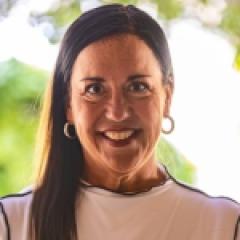
Ed Wiley is a senior executive with over 20 years of building, leading, and advising world-class machine learning, AI, and data science teams at companies at stages from startup to Fortune 50. His research interests center around Big Data and advanced statistical analytics, systems of school accountability, teacher quality and compensation, and school choice - initiatives central to the current atmosphere of standards-based testing.

Email Ed Wiley at: ewiley@stanfordalumni.org