NEPC Talks Education: An Interview With Jarvis Givens About His Book, American Grammar: Race, Education and The Building of a Nation
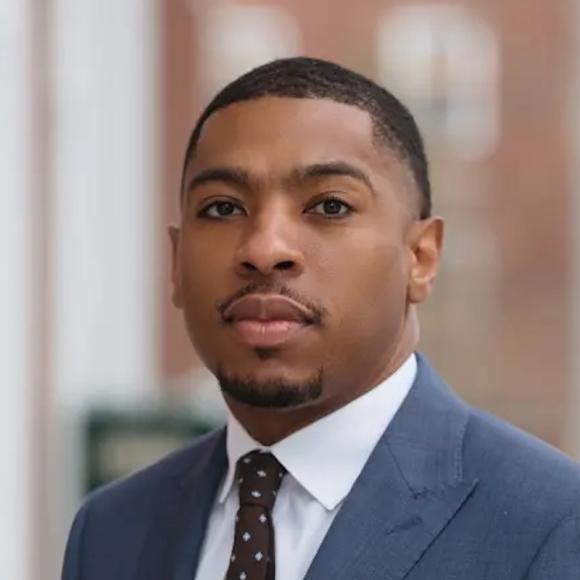
University of Wisconsin‑Madison Assistant Professor Christopher Saldaña interviews Jarvis Givens about his book, American Grammar: Race, Education and The Building of a Nation, which offers a revised origin story of American schooling that centers the experiences of Black and Native Americans.
Transcript
Please note: This transcript was automatically generated. We have reviewed it to ensure it reflects the original conversation, but we may not have caught every transcription error.
Christopher Saldaña: Hi everyone. I'm Chris Saldaña and this is the National Education Policy Center's Talks Education Podcast. In this month's podcast, we're interviewing Dr. Jarvis Givens, a professor of education and African and American Studies at Harvard University. Dr. Givens specializes in 19th and 20th century African-American history and theories of race, power, and schooling.
He's also the author of American Grammar: Race, Education, and the Building of a Nation, which is a revised origin story that exposes the legacy of racial domination in schooling, demonstrating how the educational experiences of black, white, and Native Americans were never all together separate experiences, but indeed relational.
And all part of an emerging national educational landscape. So your book opens up with the story of Susan McCoy, an enslaved woman whose mark on a historical document inspired your work. So who was Susan McCoy and why did her story compel you to rethink how we tell the history of American education?
Jarvis Givens: Yeah. Chris, thanks for one taking the time to talk to me about American Grammar and for opening up our conversation with that story about Susan McCoy, which ironically enough is one of the last things I discovered when I was in the research process for the book when I was putting closure on it last summer.
So about summer 2024, I was doing some, a final kind of digging around through collections, and I stumbled across her story. I wasn't looking for the story of Susan McCoy, her Breshears her second last name. I was actually looking for information about a man with the same last name, Breshears who was a political organizer and who was arrested for organizing political conventions among the formerly enslaved people.
Among the kind of five native tribes that also owned slaves in the late 1860s. But when looking for more information about him, Richard Breshears, if I recall correctly, was his name. I came across this transcript, an excerpt from the transcript about this woman named Susan McCoy Breshears who was petitioning the secretary of the interior about her enrollment status as a member of the Choctaw Nation. She was formerly enslaved by a Choctaw owner. And her, both her and her children were descendants of both black European and Choctaw citizens. But. I had recognized her kind of first surname McCoy as a part of my own kind of family who comes from Choctaw freedmen in Oklahoma.
And I just started to become, to become very interested in her story, not only because of the personal connection, but after I did a little more digging and realizing the story about her enrollment process in the late 1800s when she was being forced, like all native and Afro native people among the kind of five tribes were forced to enroll as a part of the, with the Dawes commission. But I learned that her enrollment site was at a form boarding school site in the Choctaw Nation. And that then just opened up all these kinds of questions about the relationship between black and native education, not only in the context of what's traditionally thought of as the US public sphere, but even in the context of what was supposed to be recognized as sovereign Native Nations, how US policies also were influencing what was happening in those contexts. Long story short.
Susan McCoy is my great-great-great grandmother who was cheated out of land that she was supposed to be, that she was supposed to receive during the enrollment process. And her story is really entangled with this much longer history between kind of US federal policies when it came to dealing with indigenous nations, but also the relationship between settler colonialism, chattel slavery, and the development of schooling and the enrollment site where this conflict happened with her.
The old Goodland Academy, which was a boarding school that was built with enslaved labor in the early 1800s was an institution that also represented this history. So I used this kind of personal family history. This institution that she was being forced to enroll at as a way of opening the door into a larger set of questions that I wanted to talk about the relationship between race, schooling and the building of the U.S.
Christopher Saldaña: You noted in your book that, Susan signed the petition document with an X that, that she was an illiterate and unschooled person, and I'm wondering if you could talk a little bit about sort of the significance of that for you and how it informed your thinking as you were going through this historical analysis.
Jarvis Givens: Yeah. Thanks again. Yeah. The introduction to the book is called Susan's Mark. And it's about reckoning with the African and indigenous presence in the early history of American schooling. And the reason that became really important to me was because here was this an ancestor of mine, but also her like several other native and Afro native people who were forced to go through the enrollment process, many of whom were illiterate. Susan herself was illiterate and it became important to me to realize that the history of education is not only about the people who had access to education, but it also had to do with the story of the withholding of opportunity as well. And so by centering the story of this unschooled illiterate woman who signed this petition to the US government by mark, by X because she wasn't able to read and write on her own that just became an opportunity for me to read into the kind of layered aspect of her story. Not only about the kind of the history of that particular boarding school, but the fact is that I, something else that I uncover in the book is that there were also anti literacy laws among the Choctaw Nation, similar to the Cherokee Nation and some of the other slave holding tribes as well.
So Susan McCoy, who's born in the early 1850s. For the first couple of decades of her life, for the most part, she's enslaved in the context of an indigenous tribe that took on similar patterns of laws and policies of restricting black education as a way of mimicking notions of civilization that were deeply ingrained in the context of the United States, right?
And even her story, right? Someone who's an illiterate woman is an important story to the larger narrative about race, power, and schooling in the US and that history of anti-literacy laws in the Choctaw Nation. Which is directly informed by the history of anti-literacy laws in the US became a really important context for reading that mark that Susan made on that petition, even as her agency is still present, right?
There she's illiterate, right? And wasn't able to be formally educated, but she's still contesting her subjugation in the best ways that she can via this petition and her efforts to get attorneys and lawyers to help her. Challenged the way that she was enrolled as a Choctaw Freedman as opposed to a Choctaw by blood.
Right? Which had direct implications for the amount of land that was distributed to people who were formally enslaved among the nation versus people who were citizens by blood. And she was insisting that she was both. Black and native, given her own parentage. And similarly for her children who were also black and native because of their father who was a known kind of Choctaw man that she had married shortly after the Civil War.
But yeah, I wanted to use her story to say that even this illiterate woman has something to offer our collective understanding about the history of race and education in the us.
Christopher Saldaña: We often hear in the United States. As public education being described as the great equalizer, right? We often hear politicians say something like, all you need is a good education and you'll be okay.
It's the best pathway out of poverty. There's a whole historical narrative that comes with that. Your book challenges that narrative. So for listeners who aren't familiar with your work, how does American Grammar tell us a different story about the origins and purpose of American public schooling?
Jarvis Givens: That I, that notion of the idea of education being a great equalizer or the really important key pillar of American democracy is really one that has been based on generations of historical narratives that have primarily focused solely on the experiences of white experiences when it comes to the development of schooling in the context of the U.S.
That kind of painted a portrait, that common schooling and the very notion of kind of public schooling for public good was about democratizing access to opportunity for social mobility, so on and so forth, despite one's humble beginnings, if you will. And perhaps, and certainly even when we look across the class line, there's, and even when it comes to the experience of kind of white students through the 19th century, like certainly there were deeply entrenched inequities there that absolutely existed, even as some people may have been able to pull themselves up through education and make a life for themselves. But we know that story is a myth for a whole host of reasons. But one of the things that I really lean into in this book is by saying that entire conception of common schooling being one of the most kind of radical developments in the, when it comes to the idea of public education.
In the kind of early modern period is really challenged when we look at the structural development of this supposedly democratic model of schooling and education in the context of the U.S. because while the founding fathers absolutely were invested in creating educational opportunities to create a shared experience.
Among this diverse group of European settlers who were then to construct a unified nation that was white English-speaking and Protestant. Those, that kind of egalitarian idea around education for white citizens is one thing, but when we are, when we actually step, take a step back and take account for the black and indigenous presence in that story. It challenges so much of what the historical narratives have presented up until this point. One of the things that I really look at is the early funding of common schooling and public education in in the early context of the U.S.
A lot of historians when talking about the early development of kind of common schooling, would talk about the importance of kind of just would just sweep past the idea of land grants being the kind of base, the kind of basis for developing early school funds first in the colonies, right?
This is a model that really comes from New England, particularly Massachusetts, that then informs things like the land ordinance of 1785 and 1787. Which is essentially a law that kind of comes into play that structures the process of U.S. expansion and builds public education as a key part of framework for expansion.
And not only just saying that common schools need to be a central part of every new township. That then makes up a kind of and the townships that then make up states that then become admitted to parts of the United States. But it also gives very clear instructions about how those common schools and public schooling would be funded.
When it talks about the 16th section of every new township being of public lands being offered for the establishment of public school funding. And so here we see a process with the land ordinance of 1785 patterned off of practices that carry over to the colonial era.
Structuring a process of the development of public schooling and common schooling for white benefit directly at the expense of native people, right? Native land possession directly contributing to the expansion of both the nation, but also schooling as a key part of the, a set of institutions to maintain internal coherence of the United States as it's expanding.
This, that narrative is not present right in the way that we've told the story about how this democratic model of education is being built right, that it's directly in relationship to native land possession. That's funding and helping to develop the infrastructure for early public schooling in America.
But then also one of the things I look at is also its relationship to chattel slavery as well, right? And looking at the way that these early public school funds that are acquiring wealth from selling public lands that are directly tied to land grabs from Native nations in the selling of unseated native land.
But oftentimes these school funds being invested in banks, right? And this is not just a story that's direct invested in banks that are trafficking in the slave trade in order to expand. The kind of the wealth and the kind of economic basis for developing schooling as a white good to borrow the language from Benjamin Justice, who's a historian who writes about education as a white good in, in a historical context that I think with when it comes to this work, right? And this is not just in the Northeast where we see this kind of relationship to banking, but even places like Georgia, for instance.
Where the kind of literary funds and public school funding by the like 1850s is also being heavily generated by slave taxes, right? In a place like Georgia, by the 1850s, over close to 50% of the state revenue comes from slave taxes. This is a similar pattern in other parts of the Southeast as well, right?
Where we see a direct relationship between early funding for establishing school funds to develop schooling. And the, and its relationship, its economic ties to slavery. And in places in the north, the connection is apparent when we look in period when slavery is abolished in the north, in places like New York where we see states like New York investing their school funds in banks that have direct ties to the slave trade.
And so for me taking aback and looking at this structurally, this idea of this kind of democratic model of education that's being developed with common schooling is not a story that can just say oh, it was a really important idea. But unfortunately, black and native people were not included in the story until later.
We had, they had to fight for access and equal opportunity within this. And what I'm saying is that actually no. That narrative about black people being excluded and native people being educated off somewhere else and not fully a part of the kind of schooling project of America is not an appropriate way of telling the story because black and native people are always a part of the story of educational development in the U.S. even when that education is being developed primarily for white citizens because the public schooling project is developing directly as a result of black and native subjection. In terms of the funding, in terms of the political ideas, that's shaping the idea of white, of the identities of white citizens when we look at curriculum, so on and so forth. And so that story about the kind of demo, early democratic ideas of U.S. education for me is a huge distortion because it does not take seriously the black native presence. In the story of the development of the kind of policies and the economic infrastructure of early US schooling.
Christopher Saldaña: I wanna ask you about a few moves that you made in your writing and in your thinking. The first one is about the word grammar. You've already talked a lot about structure.
You use the word grammar in your title, American Grammar. But typically when we think of grammar, it makes us think of sentence structure or the rules of language. What significance did the word grammar have for you and what made you choose to put it in your title?
Jarvis Givens: Yeah. In part because it's metaphorically, it definitely is hearkening to that we learn grammar in school where we think about grammar books, so on and so forth.
But also because I wanted to the same way a grammar book is something that helps us think about the kind of structure. Of language that allows us to communicate ideas about the world. And that kind of sets the parameters in terms of how we get to engage in speech acts and to thinking about the world, naming things in the world, so on and so forth.
But I also wanted to borrow that to say that this is a book where I'm trying to think structurally about education in terms of how mechanisms of law and policy created the conditions for how certain people were supposed to fit and not fit when it came to certain matters of education in the context of the U.S. and the way that education was being understood as an essential part of bringing the kind of nation into being and expanding the nation.
And that these early decisions that set the kind of structure, that laid the structural foundation of education would continue to reverberate and really influence the way that various groups would be included or not included and how they would be positioned in relationship to one another in the years to come.
And so I wanted to take seriously that early kind of structural history to be able to then be able to read how it kind of reverberates and how it then informs the way that black and native people and white folks in the kind of 19th century are experiencing American schooling, even as it's evolving.
And taking on new forms and new kinds of expression, but it's still very much so derivative of this kind of early structure that's set in the context of the U.S. right? And so the language of grammar and American grammar in particular was really helpful for me to offer a kind of a lens to hold those things together and to drive home that particular objective of the book.
Christopher Saldaña: You also make, I think, what is a key distinction between exclusion and domination. Why did you do that?
Jarvis Givens: I did that because I had, I took issue with the way that a lot of with the way that black and native folks had previously been acknowledged in the histories of education. And it had primarily been through the language of exclusion.
Is that the way when it, when the history of racial injustice was named? Particularly when it comes to black folks, it was that they were American public schooling in the U.S. was a kind of a great achievement. It was the kind of really first model in the west of creating opportunities for education, for and in order to shape access for individual citizens to participate in governing in this kind of large experiment of self-governance, right? That the U.S. is creating, thinking about its experiment with democracy after American independence and how public schooling is supposed to be a key expression of that in order to allow individual citizens to exert agency and developing the nation and governing themselves.
And unfortunately, I would say this is a great achievement. Unfortunately, some scholars would acknowledge that, black folks were enslaved and racial policies at the time. It led to them being segregated in separate, unequal black schools. And native folks were not included because they were off on kind of reservations and experiencing also a segregated kind of education through missionary boarding schools, so on and so forth.
And so they were excluded from the opportunities that common schooling as it developed in early America was able to offer individual citizens because they were not treated equally. And so that language of exclusion became the way of defining the kind of injustice that was happening in the context of US education.
And it then frames the kind of process of trying to correct that exclusion. As black people's fight is then to either choose to make, do with their experiences in segregated schools or fight to be included in this thing that they have been pushed out of and not included in. And that narrative was a problem for me because it completely erased the way that black and native people were all the way that black and native people were always included in the development of schooling for white citizens, even when they were not physically present in white common school classrooms. Because as I stated before, we don't get the kind of economic development.
The, we don't get the fiscal or physical development of these structures, right? When we think about land, when we think about enslaved labor's contribution to the physical development of white common schooling, but also slave capital and native land loss, contributing to the economic basis of white schooling, like they're not excluded from this story of the development of American schooling.
American schooling is developed over it through their subjugation. So the language of domination I found to be more appropriate than the language of kind of racial exclusion. Because it actually, it assumes that black and native people are always present in the story, right?
But we just have to take seriously their structural relationship to one another and to the kind of political economy of the us. And when we talk about domination, it also moves away from this idea of if only black and native people are allowed to be included in the kind of this political institution of American schooling, that would resolve the kind of racial injustice? It would correct the past injustices. And we know that's not true because that assumes that these institutions were ideal on the inside to begin with. And we know that's not the case because we know that they were developed economically and politically through the kind of very violent conditions.
Native land, dispossession and chattel slavery, right? When we think about this kind of structural context, and so domination, I found to be a more apt description of thinking about the relationship between native, white and black education early on, is that white education is, and common schooling is developed through the kind of racial domination of black and native people.
And that forces us to think relationally about the racial experiences of black folks and native folks and white folks and understanding early common schooling as a racial project from its inception as well.
Christopher Saldaña: Your book examines both the black experience and the indigenous experience in relation to American schooling, not separately, but as interconnected histories.
Why was it important for you to hold these experiences together? What did that approach open up for you in your research?
Jarvis Givens: One of the things when I first set out to write the book before I even started to, before I even realized the deep ties with the kind of economic links between. Settler colonialism, slavery in the early funding of U.S. schooling.
I wasn't even thinking along those lines when I first started. I first started the book because I wanted to push back against the idea that what was happening in black education and what was happening in native education was not a part of the larger national educational landscape. The way that the organization of historical scholarship, for the most part has suggested, because the way that scholarship has been organized, is that we have lots of important scholarship on the history of black education through the 19th century over here. Some really important stuff on native education over there. Then some stuff on the development of American schooling, which is the history of white education in the U.S. being seen as the kind of main script in the development of education.
And I wanted to talk about how the political leaders and education reformers that were shaping these distinct kinds of racial trajectories of schooling in the context of the U.S. were always thinking relationally about race. The ideas about black folks that they were imposing through kind of policies targeting black folks were always ideas that were defined and being crafted in relationship to ideas about whiteness and ideas about indigeneity early on and I felt like we weren't really telling a kind of an honest story and really getting a full sense of the way these different parts fit together. And so the book was initially starting about starting out to collapse these prosthetic boundaries that are typically used to organize the historical scholarship.
And that had also suggested that black and native education were like things that were happening off on the sides and not a part of the main script of, or story. There's a, and this is really something that started to happened for me when I wrote my first book about the history of black teachers, and I guess I'll just say it when I was, because I didn't include it in the book, but the idea for this really came from some frustration I had when I initially got on the job market and I was applying to jobs and I was interviewing for one particular position at a very prestigious graduate school of education and I didn't get the job and I'm possibly, I was not the best fit for, but when the search committee told me that they decided to go with someone else, they said that they told me that the work that I was doing on the history of black education was really good.
This work on black teachers, but it felt too niche and they were looking for someone who was revised working to revise the main script of U.S. education. And I was like, oh, I always thought that the kind of history of things that were happening in black segregated schooling, the kind of specific policies that were targeting black folks from the slavery era up and through Jim Crow and more recent history was also a part of the, was deeply a part of the main script of the history of education.
But then that forced me to take a step back and realizing actually we have the some issues in terms of how we've organized our thinking here. And this is where I decided that I really wanted to say it's not just, and it wasn't just about inserting the kind of black educational experiences there because I always knew that native education was always central to the project as well. You look at anything like the early the charter of kind of Harvard University or the College of William and Mary, some of the earliest iterations of schooling in the context of the U.S. you know, there were always ideas about anti indigenous ideas and ideas around whiteness that were intermingling with one another, and I wanted to integrate these stories together to see how they spoke and to one another. And what happens when we stage a conversation about the early development of education that took seriously the black and native presence as always, a factor in the story, because there's no way to narrate any set of institutions in the context of the early America without thinking about the kind of three races that occupy the North American territory to borrow from Alexis de Tocqueville's political theory around kind of America American democracy when he talks about these deeply entrenched kinds of relationships between indigenous folks, black folks, and white folks in the U.S. and the kind of antagonisms that were always present between them, and that we have to wrestle with that anytime.
We're trying to understand the kind of early political landscape of the United States, and I wanted to take that same frame. And think about what I call this founding racial triad. When I offered a new account of the story of American education,
Christopher Saldaña: you talk very openly in your book about the importance of your own personal experiences and in thinking about studying history, how that shapes and is a part of who you are and what you've experienced in your own life.
You, you talk about this even in the mascots that were in the local high schools where you grew up in Compton, California. How do you see the histories you uncovered in this research showing up in communities like the one where you grew up?
Jarvis Givens: Yeah, thanks for bringing up that point.
Yeah. I grew up in Compton and the kind of two main rival high schools was Centennial High School and Compton High School, and I grew up with the two mascots for these two schools were Apaches and Tar Babes. Centennial's colors were red. Compton High - their colors were blue.
Which coincidentally mapped on to the kind of colors of the dominant gangs in the city. And Compton, these schools were established when Compton was a predominantly white city before white flight that happened before black folks moved in. And then it was a kind of a majority black city, and then it was a majority black and Latin and Latinx city, and then ultimately majority kind of Latinx city as it is now. But this city has a kind of very, like all cities in the context of the U.S. right? Have these very complicated histories of race and schools. The development of schools in these contexts are always reflections of that. And I guess what I was just trying to say with that point I didn't do a deep dive into the history of kind of education in Compton.
That's for some future work. But I was just trying to point out that the, like that story about the mascots to demonstrate how the kind of this relational history of race is has always been present in our lives, in the built environment around us. And it's, and to demonstrate that this is a living history, right?
That's still a part of our lives even to this day and right. And that kind of example from my hometown is just, was just an easy way of pointing to something to reiterate that point. At the very end of the book when I point out those mascots in that story. And because I wanted people to read this book and realize this is not just a history that I'm want people to say, oh, this is something that happened in the 1800s and how American education was first developed.
I wanted to emphasize throughout the book, because I give lots of different anecdotes of different ways that the history of race and education continues to show up. In our world, in everyday discourse. I give that example of coming into the airport at MA in Boston and the governor of Massachusetts talking about the kind of the establishment of the first public schools in America, just very casually as this kind of great achievement. And I'm like, yeah. As I'm also reading and thinking about the kind of early, how those early public schools were developed and how that's not a part of the stories that we tell when we think about the origins of schooling in the context of the U.S.
So I just wanted to give these really grounded personal narratives to help people understand that having a mature historical consciousness about the history of education is not just something that historians should do, but it's something that we should all be working to do because we all go to school.
We're all shaped by these institutions. They're a central part about how we're socialized into the world that we live in. And these institutions that we take for granted have a very complicated history. And I think we have to do a better job of educating the public, and especially educating students and teachers who are going into schools every day about this history.
So I wanted, I pulled in those kinds of examples to bring myself along in, in the writing of the story and to encourage readers to think about how the history of education also shapes their experiences today, but now how it also shaped and their own journeys through education as well.
Cause we all are connected to these histories of education. And I don't know that we've necessarily done a good job of inviting the larger public to think about the history of education in that way.
Christopher Saldaña: If someone finishes American Grammar and walks away with one shift in how they're thinking, what do you hope that shift would be?
Jarvis Givens: I hope that shift would be a complete shattering of the idea that education is or was ever a kind of benign institution, right? But to understand that education has always been, it is always political, right? And the choices that we make as educators, as students, as community members who are advocating for education and schooling in some way always has political implications.
Because the kind of architects of who shaped the kind of early structure of schooling as a central part of the nation building project and as a way of forming citizens, always understood it to have very specific kind of political and economic ends for the nation as a whole and for individual people also.
And I'm just hoping that the stories in American Grammar really clarify that and demystify what we mean when we say that education is always political and always has been. Hopefully this new origin story helps people have a newfound appreciation for that and understand it in much more, in a much more detailed way.
Christopher Saldaña: Thank you, Dr. Givens, for being on this month's podcast. As always, we hope you're safe and healthy. And remember, for the latest analysis on education policy, you should subscribe to the NEPC newsletter at nepc.colorado.edu.