NEPC Topic Experts on School Segregation

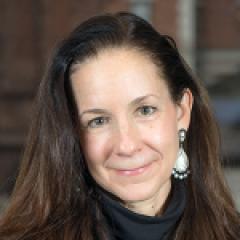
Beatriz Arias

Center for Applied Linguistics

Dr. Arias is former Vice President and Chief Development Officer for the Center for Applied Linguistics (CAL), a non-profit organization based in Washington, DC. Currently she is a Senior Research Scientist for CAL. Arias is an emeritus Professor at Arizona State University with expertise in policy issues for Latinx students including bilingual education and school desegregation.

Email Beatriz Arias at: barias@cal.org


Robert Bifulco

Syracuse University

Robert Bifulco is the Associate Dean, Chair, and Professor in the Public Administration and International Affairs department at the Maxwell School, as well as a Senior Research Associate in the Center for Policy Research. His research has focused on the evaluation of educational policies including whole-school reform, school accountability programs, charter schools, magnet schools, and student assignment policies. 

Email Robert Bifulco at: rbifulco@maxwell.syr.edu

Derek W. Black

University of South Carolina

Derek Black is one of the nation’s foremost experts in education law and policy.  He focuses on educational equality, school funding, the constitutional right to education, segregation, and the federal role in schools. He has published over thirty scholarly articles in the nation’s top legal journals, including the flagship journals at Yale, Stanford, New York University, California-Berkeley, Cornell, Northwestern and Vanderbilt. That work has been cited several times in the federal courts, including the U.S. Supreme Court. It has also drawn him into litigation disputes over school funding and federal policy, where he has served as an expert witness and consultant.

He is currently a Professor of Law at the University of South Carolina, where he holds the Ernest F. Hollings Chair in Constitutional Law and directs the Constitutional Law Center. He began his career in teaching at Howard University School of Law, where he founded and directed the Education Rights Center. Prior to teaching, he litigated education cases at the Lawyers' Committee for Civil Rights Under Law.   

Email Derek Black at: blackdw@law.sc.edu

Kevin D. Brown

Indiana University Law School

Kevin Brown, Richard S. Melvin Professor, has been on the faculty of Indiana University Maurer School of Law since 1987. Professor Brown is a 1978 graduate from the Indiana University Kelley School of Business where he majored in Accounting. He graduated from Yale Law School in 1982. After Law School, he worked for four and half years at the Indiana law firm of Baker & Daniels (since merged into Faegre Drinker Biddle & Reath LLP). He teaches Race & Law, Torts, Law & Education, Sports Law, Criminal Law and Transnational Comparative Inequality. Brown has been a visiting professor at the University of Texas School of Law, University of Alabama School of Law, and University of San Diego School of Law. He has been affiliated with universities on four different continents including the School of Transnational Law of Peking University in Shenzhen, in Shenzhen, China; the National Law School of India University in Bangalore, India; the Indian Law Institute in New Delhi, India; the Law Faculty of the University of Witwatersrand in Johannesburg, South Africa; the Law Faculty of the University of Cape Town in Cape Town, South Africa; Adilet Law School in Almaty, Kazakhstan; and the University of Central America in Managua, Nicaragua. Brown also spent the Spring Semester of 2014 teaching in London Law School Consortium Program.

Email Kevin D. Brown at: brownkd@indiana.edu

Prudence L. Carter

Brown University

Prudence L. Carter is Sarah and Joseph Jr. Dowling Professor of Sociology at Brown University. Prior to coming to Brown, she was the E.H. and Mary E. Pardee Professor and Dean of the Graduate School of Education at Berkeley. Professor Carter’s research focuses on explanations of enduring inequalities in education and society and their potential solutions. Specifically, she examines academic and mobility disparities shaped by the effects of race, ethnicity, class, and gender in the United States and global society. 

Carter’s award-winning book, Keepin’ It Real: School Success beyond Black and White (2005), debates various cultural explanations used to explain school achievement and racial identity for low-income Black and Latino youth in the United States. Her other books include Stubborn Roots: Race, Culture, and Inequality in U.S. & South African Schools and Closing the Opportunity Gap: What American Must Do to Give Every Child an Even Chance (co-edited with Dr. Kevin Welner).

A Brown alumna (’91), Professor Carter received a Bachelor of Science degree in applied mathematics and economics. She earned a Master of Art in Sociology and Education from Teachers College, Columbia University and a Master of Philosophy and Ph.D. in Sociology from Columbia University.  

Email Prudence L. Carter at: prudence_carter@brown.edu

Casey Cobb

University of Connecticut

Casey Cobb is Professor and Department Head of Educational Leadership and Director of the Center for Education Policy Analysis at the University of Connecticut. His current research interests include policies on accountability, school choice, and desegregation, where he examines the implications for equity among historically marginalized populations. He teaches courses in policy studies, research methods, and program evaluation.

Email Casey Cobb at casey.cobb@uconn.edu

Maia Cucchiara

Temple University

Maia Cucchiara is an Associate Professor of Urban Education at Temple University. A former teacher, she holds a joint Ph.D. in Education and Sociology. Her research uses qualitative methods, especially ethnography, to examine people’s lived experiences with education policy in the urban context. Dr. Cucchiara has conducted research on education and urban revitalization, school choice, parenting education, and urban school “reform.” Her latest work, funded by the National Science Foundation, focuses on efforts to improve school culture in urban high schools. Dr. Cucchiara is the author of Marketing Schools, Marketing Cities:  Who Wins and Who Loses When Schools Become Urban Amenities (University of Chicago Press, 2013) and is currently working on a book about innovative urban high schools.

Email Maia Cucchiara at: maia.cucchiara@temple.edu

Antonia Darder

Loyola Marymount University

Antonia Darder is a distinguished international Freirian scholar. She holds the Leavey Presidential Endowed Chair of Ethics and Moral Leadership at Loyola Marymount University, Los Angeles and is Professor Emerita of Education Policy, Organization, and Leadership at the University of Illinois Urbana Champaign. Her scholarship focuses on issues of racism, political economy, social justice, and education. Her work critically engages the contributions of Paulo Freire to our understanding of social inequalities in schools and society. Darder’s critical theory of biculturalism links notions of culture, power and schooling, as well as cultural issues to the brain, testing, and inequality. In recent scholarship on ethics and moral questions of education, she articulates a critical theory of leadership for social justice and community empowerment. She is the author of numerous books and articles in the field, including Culture and Power in the Classroom (20th Anniversary edition), Reinventing Paulo Freire: A Pedagogy of Love, and A Dissident Voice: Essays on Culture, Pedagogy, and Power; co-author of After Race: Racism After Multiculturalism; and co-editor of The Critical Pedagogy Reader, and Latinos and Education: A Critical Reader

E-mail Antonia Darder at antonia.darder@lmu.edu

Elizabeth DeBray

University of Georgia

Elizabeth DeBray (Ed.D., Harvard University) is a Professor of Educational Administration and Policy at the University of Georgia.  Dr. DeBray’s major interests are the implementation and effects of federal and state elementary and secondary school policies, and the politics of education at the federal level. She is author of Politics, Ideology, and Education: Federal Policy during the Clinton and Bush Administrations (Teachers College Press, 2006) and co-editor (with E. Frankenberg) of Integrating Schools in a Changing Society (UNC Press, 2011). She was a 2005 recipient of the National Academy of Education/Spencer Postdoctoral Fellowship.  Since 2011, she has served as the co-P.I. (with Christopher Lubienski and Janelle Scott) of two W.T. Grant Foundation-funded project on how intermediary organizations promote research on incentivist education policies in urban settings.

Email Elizabeth DeBray at: edebray@uga.edu

Kara Finnigan

University of Michigan

Kara Finnigan is a professor of education at the University of Michigan's School of Education. Previously, she spent 19 years at the University of Rochester, most recently as Professor of Education Policy and Leadership and as a Distinguished Equity, Inclusion, and Social Transformation Fellow. She has conducted research and evaluations of K-12 educational policies and programs at the local, state, and federal level for more than 25 years. She has written extensively about low-performing schools and high-stakes accountability, district reform, principal leadership, and school choice. Finnigan has published two edited books and her co-authored book Striving in Common: A Regional Equity Framework for Urban Schools was published last year by Harvard Education Press. Her research blends perspectives in education, sociology, and political science; employs both qualitative and quantitative methods, including social network analysis and GIS mapping; and focuses on urban school districts. Her recent research focuses on diffusion of research evidence through school systems, connections between housing and education policy to reduce segregation, and equity networks that focus on system change. Finnigan serves on the Rochester Monroe Anti-Poverty Initiative’s Policy Committee and was recently invited to testify at a hearing of the New York Advisory Committee to the U.S. Commission on Civil Rights.

Email Kara Finnigan at: ksfinn@umich.edu

Erica Frankenberg

Pennsylvania State University

Erica Frankenberg is an associate professor of education and demography at the Pennsylvania State University, and co-director of the Center for Education and Civil Rights. Her research interests focus on racial desegregation and inequality in K-12 schools, including how school choice policies affect students’ stratification and equal opportunity.

Email Erica Frankenberg at: euf10@psu.edu

Gene V Glass

Gene V Glass is Regents' Professor Emeritus at Arizona State University. He is also currently a Senior Researcher at the National Education Policy Center. Trained originally in statistics and educational psychology, his interests broadened to include psychotherapy research, evaluation methodology, and policy analysis. Dr. Glass has made many important contributions to education statistics, notably his development of "meta-analysis." He applied meta-analysis to his often-cited research on the relationship of class size and achievement. He has published over a dozen books and nearly two hundred articles in scholarly and professional journals.

Email Gene Glass at: gvglass@gmail.com

Shaun Harper

University of Southern California

Dr. Shaun R. Harper is a Provost Professor in the Rossier School of Education and Marshall School of Business, the Clifford and Betty Allen Chair in Urban Leadership, and executive director of the USC Race and Equity Center. He is author of over 100 peer-reviewed journal articles and other academic publications. Review of Research in EducationTeachers College RecordHarvard Educational ReviewJournal of Higher EducationReview of Higher Education, and Journal of College Student Development are some journals that have published his research. Professor Harper’s research has been cited in more than 8,000 published studies. His books include Advancing Black Male Student Success from Preschool through Ph.D. and Scandals in College Sports. Johns Hopkins University Press is publishing his 13th book, Race Matters in College.

Email Shaun Harper at: sharper@usc.edu

Jennifer Jellison Holme

University of Texas at Austin

Dr. Jennifer Jellison Holme is an Associate Professor of Educational Policy and Planning at The University of Texas at Austin. Her research focuses on the politics and implementation of educational policy, with a particular focus on the relationship between school reform, equity, and diversity in schools. Her specific areas of research include school desegregation policy, high stakes testing, and school choice policy. She earned her B.A. in Sociology from UCLA, her Ed.M. in Administration, Planning, and Social Policy from the Harvard Graduate School of Education, and her Ph.D. in Urban Schooling from UCLA.

Email Jennifer Holme at: jholme@austin.utexas.edu

Robert Kim

Education Law Center

Robert Kim is the Executive Director of Education Law Center, a national nonprofit organization dedicated to preserving public education and fostering equitable educational opportunity for students in the United States. His expertise includes most facets of education law and policy related to pre-K-12 and postsecondary education in the United States, civil rights litigation and advocacy, and constitutional law.

Email Robert Kim at: robertkimnyc@gmail.com

Michal Kurlaender

University of California, Davis

Michal Kurlaender is Professor of Education Policy at the University of California, Davis.  Her research focuses on students’ educational pathways, in particular K-12 and postsecondary alignment, and access to and success in college. Kurlaender works closely with all of California’s public K-12 and higher education sectors. She has recently launched an IES-funded partnership with the California Department of Education to explore college and career readiness in the era of Common Core. She also serves as a co-director of PACE (Policy Analysis for California Education), and is affiliated with the UC Davis Center for Poverty Research, Wheelhouse: The Center for Community College Leadership and Research, and the Centers for the Analysis of Postsecondary Readiness and Analysis of Postsecondary Education and Employment (both at Teachers College). She received her EdD from Harvard University in 2005. Her work has been published in various academic and policy outlets.

Email Michal Kurlaender at: mkurlaender@ucdavis.edu

Jaekyung Lee

University at Buffalo, SUNY

Jaekyung Lee, PhD, is a UB Distinguished Professor and former dean of the Graduate School of Education at the University at Buffalo, SUNY. A fellow of the American Educational Research Association (AERA) and a Co-PI of the National Center for Early Literacy and Responsible AI (CELaRAI), Lee is an internationally recognized leader in educational policy evaluation with focus on accountability and equity issues. He has a PhD in education from the University of Chicago. Lee is currently a Richard P. Nathan Fellow of the Rockefeller Institute of Government. He was also a fellow of the Center for Advanced Study in the Behavioral Sciences at Stanford University and a fellow of the National Education Policy Center at the University of Colorado at Boulder. He is the recipient of 2007 AERA Raymond B. Cattell Early Career Award and 2015 Western New York Educational Service Council Robert W. Heller Award. Lee is the author of The Anatomy of Achievement Gaps: Why and How American Education is Losing (But Can Still Win) the War on Underachievement (Oxford University Press).

Email Jaekyung Lee at: jl224@buffalo.edu

Francesca López

University of Wisconsin at Madison

Dr. Francesca López is the Jim and Georgia Thompson Distinguished Professor of Education in the Educational Leadership and Policy Analysis department at the University of Wisconsin, Madison . She began her career in education as a bilingual (Spanish/English) elementary teacher, and later as a high school counselor, in El Paso, Texas. López is an AERA and APA Division 15 Fellow. Her research is focused on educator knowledge and behaviors that promote achievement and identity outcomes for marginalized youth in various educational settings. 

Email Francesca López at: flopez5@wisc.edu

Bryan Mann

University of Kansas

Bryan Mann is an associate professor in the Department of Educational Leadership and Policy Studies at the University of Kansas, and Director of the Center for Geography of Education Policy. He holds a PhD in Educational Theory and Policy from the Pennsylvania State University. His research focuses on geography and educational policy, exploring key questions about school enrollment trends and policy mechanisms that enhance educational and social equity. Dr. Mann's work spans areas such as segregation and diversity, school choice, and alternative education models. Notably, his studies have shed light on trends related to rural segregation in Alabama, the impact of gentrification on education in Washington DC, and the geospatial patterns of cyber charter schools in Pennsylvania. Prior to his role at the University of Kansas, Dr. Mann was an assistant professor at the University of Alabama and a high school English teacher in Monmouth County, New Jersey.

Email Bryan Mann at: bryanmann@ku.edu

Rich Milner

Vanderbilt University

H. Richard Milner IV (also known as Rich) is Cornelius Vanderbilt Distinguished Professor of Education and Professor of Education in the Department of Teaching and Learning at Peabody College of Vanderbilt University. His research, teaching, and policy interests concern urban education, teacher education, African American literature, and the social context of education. Professor Milner’s research examines practices and policies that support teacher effectiveness in urban schools. Professor Milner is President of the American Educational Research Association, the largest educational research organization in the world. He is an elected member of the National Academy of Education and a Fellow of the American Educational Research Association. Professor Milner’s work has appeared in numerous journals, and he has published seven books. His most recent are: Start where you are but don’t stay there: Understanding diversity, opportunity gaps, and teaching in today’s classrooms (Harvard Education Press, 2010 and 2020, Second Edition), Rac(e)ing to class: Confronting poverty and race in schools and classrooms (Harvard Education Press, 2015) and These kids are out of control: Why we must reimagine classroom management for equity (Corwin Press, 2018).   

Email Rich Milner at: rich.milner@vanderbilt.edu

Gary Miron

Western Michigan University

Gary Miron is professor of evaluation, measurement, and research at Western Michigan University. He has extensive experience evaluating school reforms and education policies. Over the past two decades he has conducted several studies of school choice programs in Europe and in the United States, including nine state evaluations of charter school reforms. In recent years, his research has increasingly focused on the education management organizations (EMOs) and efforts to create systemic change in urban schools in Michigan and rural schools in Louisiana. Prior to coming to Western Michigan University, Dr. Miron worked for 10 years at Stockholm University in Sweden.


Email Gary Miron at: garmiron@gmail.com

Tel. 269-599-7965

Sally Nuamah

Northwestern University

Sally A. Nuamah is an Associate Professor of Political Science, Human Development and Social Policy at Northwestern University. She is the author of How Girls Achieve and Closed for Democracy, has published a dozen peer-reviewed articles in top journals, and has received nearly 40 awards from organizations including the American Political Science Association, Forbes, and the Carnegie Corporation. Dr. Nuamah has held academic appointments at Duke, Princeton, Harvard, and the University of Pennsylvania, with research funded by the National Science Foundation and the Russell Sage Foundation. She has worked as a policy expert with USAID in South Africa and as a gender expert for the United Nations Foundation in Ghana. She founded the TWII Foundation, which provides scholarships for girls who are first in their families to attend college. She also produced HerStory, a documentary on girls and education in Ghana, named “Best Documentary Short” by PBS and distributed by the Discovery Channel. Her honors include a “Change-Maker” award from the White House Council on Women and Girls. She received her B.A. from The George Washington University and her M.A. and Ph.D. from Northwestern University, where she became the youngest professor to receive tenure in the School of Education and Social Policy.

Email Sally Nuamah at: Sally.Nuamah@northwestern.edu

Gary Orfield

University of California, Los Angeles

Gary Orfield is Distinguished Research Professor of Education, Law, Political Science and Urban Planning at the University of California, Los Angeles, and is co-director of the Civil Rights Project/Proyecto Derechos Civiles at UCLA. He holds a Ph.D. in political science from the University of Chicago. His interests include the study of civil rights, urban policy, and minority opportunity. His research methods range from original survey research to analysis of national data sets to political analysis of urban decision-making.

Email Gary Orfield at: orfield@gmail.com

Civil Rights Project/Proyecto Derechos Civiles

Laurence Parker

University of Utah

Laurence Parker is a professor in the Department of Educational Leadership & Policy at the University of Utah. He has developed and taught classes on critical race theory and education policy issues and has concentrated his research and teaching in this area as it relates to equity and education, both K-12 and higher education. His most recent publication is a co-authored book chapter that appears in Facing Accountability in Education: Democracy & Equity at Risk (edited by Christine Sleeter, 2007, Teachers College Press), and he recently edited vols. 29 & 31 of the Review of Research in Education for AERA. Parker is associated with the Utah Education Policy Center.

Email Laurence Parker at: laurence.parker@utah.edu

Jesse Rothstein

University of California, Berkeley

Jesse Rothstein is Associate Professor in the Goldman School of Public Policy and the Department of Economics at the University of California, Berkeley and a Research Associate of the National Bureau of Economic Research.   His research focuses on education and tax policy, and particularly on the way that public institutions ameliorate or reinforce the effects of children’s families on their academic and economic outcomes. His recent work includes studies of the evaluation of teacher quality using student achievement data; the design of incentive compensation contracts for teachers; the role of family income in the black-white test score gap; and the effects of unemployment insurance on job search.  His work has been published in the American Economic Review, the Quarterly Journal of Economics, and the Brookings Papers on Economic Activity, among other outlets. He has a Ph.D. in economics and a Masters in Public Policy, both from the University of California, Berkeley. 

Email Jesse Rothstein at: rothstein@berkeley.edu

Carrie Sampson

Arizona State University

Carrie Sampson, Ph.D. is an associate professor in the Division of Educational Leadership and Innovation at Arizona State University. Her scholarship focuses on how educational leadership and policymaking at the K-12 level influences equity and social justice for minoritized youth and their families. Dr. Sampson has conducted research on school desegregation policies. Her most recent line of research is centered at the school district level with an emphasis on governance, particularly the role of school boards, community advocacy, decentralization, and school choice policies. Her methodological expertise is in case study and qualitative methods. Dr. Sampson’s research on school boards was recently funded by the National Academy of Education/Spencer Postdoctoral Fellowship and the Ford Foundation Postdoctoral Fellowship.

Email Carrie Sampson at: csampso4@asu.edu

Janelle T. Scott

University of California, Berkeley

Janelle Scott is a Professor and the Robert C. and Mary Catherine Birgeneau Distinguished Chair in Educational Disparities at the University of California at Berkeley in the Graduate School of Education, African American Studies Department, and Goldman School of Public Policy. She earned a Ph.D. in Education Policy from the University of California at Los Angeles’ Graduate School of Education and Information Studies, and a B.A. in Political Science from the University of California at Berkeley. Before earning her doctorate, she was a teacher in Oakland, California. 

Professor Scott’s research investigates how market-based educational reforms affect democratic accountability and equity in public education. She has explored this research program across several policy strands: 1) the racial politics of public education, 2) the politics of school choice, marketization, and privatization, 3) the politics of research evidence on market-oriented reforms, and, 4) the role of elite and community-based advocacy in shaping public education and research evidence utilization. Her work has appeared in several edited books and journals, including the Peabody Journal of Education, Educational Policy, Qualitative Inquiry, the American Educational Research Journal, and the Harvard Educational Review.

She was awarded a Spencer Dissertation Year Fellowship, and a National Academy of Education/Spencer Foundation Postdoctoral Fellowship. In 2014, she was awarded the Distinguished Scholar Award from the American Educational Research Association’s (AERA) Committee on Scholars of Color.  In 2020, she was elected as an AERA Fellow. She is Vice President for Division L (Policy and Politics) of AERA (2019-2022). She is the editor of School choice and diversity: What the evidence says (2005 Teachers College Press), and, with Sonya Horsford and Gary Anderson, author of The Politics of Education in an Era of Inequality: Possibilities for democratic schooling (2018 Routledge). 

Email Janelle T. Scott at: jtscott@berkeley.edu
Genevieve Siegel-Hawley

Virginia Commonwealth University

Genevieve Siegel-Hawley is an associate professor in the Department of Educational Leadership at Virginia Commonwealth University. Her research examines the scope and dynamics of school segregation and resegregation in U.S. metropolitan areas, along with policies for promoting intentionally integrated schools and communities. Siegel-Hawley has published numerous articles dealing with these topics in journals like Teachers College Record, the Harvard Educational ReviewEducational Researcher and the Urban Review. She is also the author of two books, When the Fences Come Down: 21st Century Lessons from Metropolitan School Desegregation (UNC Press, 2016) and A Single Garment: Creating Intentionally Diverse Schools that Benefit All Children (Harvard Education Press, 2020). Siegel-Hawley teaches courses examining how and why equal educational opportunity is distributed so unequally across urban, suburban and exurban districts. She is a native of Richmond and a proud graduate of and former teacher in Richmond Public Schools.

Email Genevieve Siegel-Hawley at: gsiegelhawle@vcu.edu
Gail L. Sunderman

Maryland Equity Project

Gail L. Sunderman, Ph.D., is co-founder and former director of the Maryland Equity Project at the University of Maryland, a research and policy center focused on access to educational opportunity in Maryland. Her research focuses on educational policy and politics, school reform, and the impact of policy on the educational opportunities for diverse students. Prior to joining University of Maryland, she directed the Mid-Atlantic Equity Center at The George Washington University where she spearheaded the development of the Equity Planning Tool, a research-based instrument designed to assist districts to assess for equity. At the Harvard Civil Rights Project (CRP), she was lead researcher on a five-year study examining the implementation of the No Child Left Behind Act of 2001 and how this legislation influenced educational change in states and local school districts. In addition to her scholarly work, Sunderman has served as expert consultant on educational disparities for the U.S. Department of Justice and other organizations. She is a former Fulbright scholar to Afghanistan and received her Ph.D. in political science from the University of Chicago.

Email Gail Sunderman at: glsunderman@yahoo.com

P.L. Thomas

Furman University

P. L. Thomas, Professor of Education (Furman University, Greenville SC), taught high school English in rural South Carolina before moving to teacher education. He is a former column editor for English Journal (National Council of Teachers of English), current series editor for Critical Literacy Teaching Series: Challenging Authors and Genres (Brill), and author of Teaching Writing as Journey, Not Destination: Essays Exploring What ‘Teaching Writing’ Means (IAP, 2019) and How to End the Reading War and Serve the Literacy Needs of All Students: A Primer for Parents, Policy Makers, and People Who Care (IAP, in press). NCTE named Thomas the 2013 George Orwell Award winner. He co-edited the award-winning (Divergent Book Award for Excellence in 21st Century Literacies Research) volume Critical Media Literacy and Fake News in Post-Truth America (Brill, 2018). Follow his work @plthomasEdD and the becoming radical (http://radicalscholarship.wordpress.com/).

Email P.L. Thomas at: paul.thomas@furman.edu

Karolyn Tyson

Georgetown University

Karolyn Tyson is Professor and Chair of Sociology at Georgetown University. She received her Ph.D. in Sociology from the University of California at Berkeley in 1999. Her main fields of interest are sociology of education, social psychology, and social inequality. Dr. Tyson's publications have addressed such topics as how schools reproduce social inequality and the role of the schooling experience in the development of attitudes toward school. Her overall program of research centers on understanding how cultural, structural, and individual-level factors affect school achievement and contribute to unequal educational outcomes.

Email Karolyn Tyson at: kt801@georgetown.edu


Joshua Weishart

Suffolk University Law School

Joshua Weishart is a professor of law at Suffolk University Law School. His research and advocacy center on education rights under federal and state law, especially state constitutions. Within that discipline, his scholarship has focused on issues of school funding, democratic education, integration, and teacher rights. Weishart’s law journal publications include articles in the Stanford Law Review, William & Mary Law Review, Florida Law Review, and U.C. Davis Law Review. Other works include chapters in edited collections such as the Oxford Handbook on U.S. Education Law.

Email Joshua Weishart at joshua.weishart@suffolk.edu


Amy Stuart Wells

Bank Street College of Education

Amy Stuart Wells, a leader and established scholar in the field of education, is the Chief Research Officer of the Bank Street School of Education and Professor Emeritus of Sociology and Education at Teachers College, Columbia University. She is also the founder and executive director of TC’s nationally recognized professional development program Reimagining Education: Teaching, Learning, and Leading for a Racially Just Society and leads several research projects, including The Public Good: A Public School Support Organization, which is dedicated to supporting and sustaining racially diverse public schools. Throughout her career, Wells has made extensive scholarly contributions, not only through the publication of her own books and articles but also by serving as the president of the American Educational Research Association (AERA) from 2018-19, among other endeavors. She has worked on issues related to school reform policies and the ways that diversity and segregation impact the health of a school. Her current work is focused on supporting teachers, schools, and school systems in integrating anti-racist policies and practices into their approach to education. 

Email Amy Stuart Wells at: awells@bankstreet.edu


Kevin G. Welner

University of Colorado Boulder

Professor Kevin Welner teaches educational policy and law at the CU Boulder School of Education. He’s also the director of the National Education Policy Center, which works to build bridges between the research world and the broader public. Kevin has authored or edited a dozen books and more than 100 articles and book chapters, including a casebook for law school students about education law, and a book called Closing the Opportunity Gap, which is the foundation for his recent work about the importance of improving children’s opportunities to learn inside and outside of school, including the Price of Opportunity Project. Welner has been recognized by the American Educational Research Association as a Fellow and been given the AERA's Outstanding Public Communication of Education Research Award (in 2017), Early Career Award (in 2006), Palmer O. Johnson Award (best article in 2004). The Horace Mann League gave Welner its Outstanding Public Educator Award in 2018. He received his B.A. in Biological Sciences from UCSB and his J.D. and Ph.D. from UCLA.

Email Kevin G. Welner at: kevin.welner@colorado.edu

Kathryn Wiley

Howard University

Dr. Kathryn E. Wiley is an Assistant Professor in the Department of Educational Leadership and Policy Studies in the School of Education at Howard University. Her work focuses on racial inequality and educational opportunity. She uses multiple methods to understand the historic connections between past and present funding inequalities. An avid public scholar, she is passionate about supporting education leaders, advocates, organizers, and lawmakers in equity-oriented change. Her work on the Price of Opportunity project at NEPC has included coordinating and conducting qualitative research with state partners and creating public-facing research dissemination tools for advocates. 

Email Kathryn Wiley at: kathryn.wiley@howard.edu

John T. Yun

Michigan State University
John T. Yun is an associate professor in the K-12 Educational Administration program in the College of Education at Michigan State University. His research focuses on issues of equity in education, specifically: patterns of school segregation; the effects of school context on educational outcomes; the importance of integrating evaluation into everyday school practice; and the educative/counter-educative impacts of high-stakes testing. Before joining the MSU faculty he served as the Founding Director of the University of California Educational Evaluation Center. 
 
Email John Yun at: jyun@msu.edu